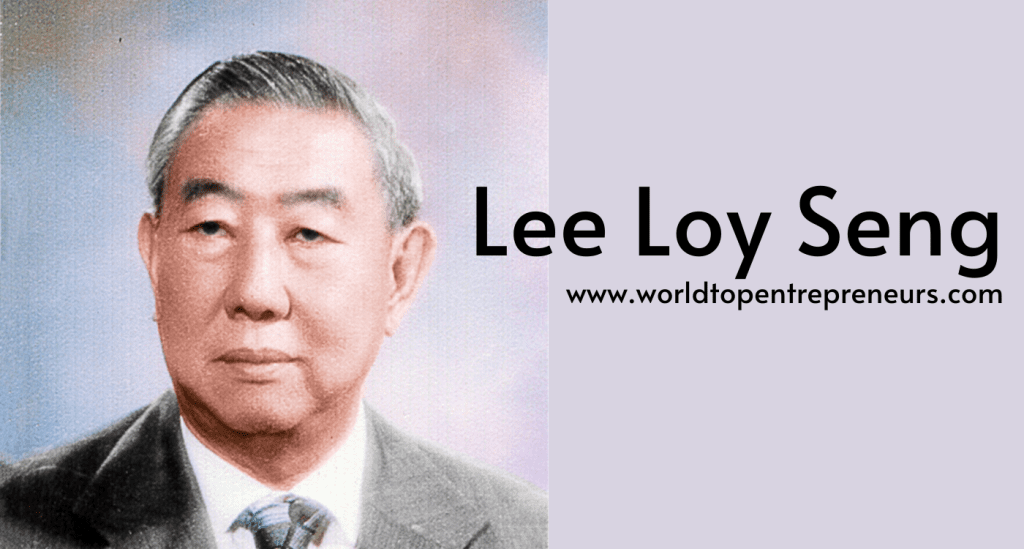
Lee Loy Seng is a notable business leader in Malaysia, best known for his pivotal role in shaping the success of KLK Berhad (Kuala Lumpur Kepong Berhad), one of the country’s largest and most influential plantation and palm oil companies. His entrepreneurial journey and leadership have contributed significantly to the growth of KLK, transforming it into a multinational company with a global presence in various industries, including palm oil, rubber, and chemicals. Under his leadership, KLK Berhad has not only solidified its standing in the plantation sector but also diversified into other business areas.
In this blog, we will delve into Lee Loy Seng’s entrepreneurial journey, his educational background, career development, challenges he faced, and the remarkable successes achieved under his leadership at KLK Berhad.
Early Life and Educational Background: Laying the Groundwork for Success
Born in Malaysia, Lee Loy Seng grew up in an environment where entrepreneurship was highly valued, and hard work was a core principle. Lee’s early exposure to business and industry played a critical role in shaping his entrepreneurial mindset. He recognized early on the opportunities available within Malaysia’s thriving agricultural and plantation sectors.
Lee pursued his Bachelor’s degree in Economics from University of Malaya, Malaysia’s premier institution. His academic foundation in economics equipped him with a deep understanding of business principles, market analysis, and financial management. His time at the university helped him realize his passion for the business world and shaped his vision of entering the industrial sector.
Equipped with an understanding of economics and business management, Lee Loy Seng returned to the business world and began his journey with KLK, a company that would become the hallmark of his entrepreneurial legacy.
KLK Berhad: A Legacy of Growth and Transformation
KLK Berhad was established in 1906, and by the time Lee Loy Seng joined the company, it had already made its mark in the plantation sector. However, it was under Lee’s leadership that KLK saw significant growth, diversification, and strategic expansion.
Entering the Family Business
Lee Loy Seng became involved with KLK Berhad, which was initially focused primarily on palm oil cultivation. As a family business, the company was driven by a strong commitment to agricultural excellence and a focus on sustainable growth. Lee recognized the potential of the plantation sector in Malaysia and leveraged his expertise to contribute to the company’s development.
Under his guidance, KLK Berhad expanded its operations beyond the plantations to diversify into related industries such as oleochemicals, rubber, and property development. These diversified operations enabled the company to not only weather fluctuations in commodity prices but also strengthen its position as a leading player in the regional economy.
Diversification and Expansion
One of Lee Loy Seng’s major contributions to KLK Berhad was his strategic vision to expand and diversify the company’s business portfolio. He realized that relying solely on the plantation sector could limit the company’s growth potential, so he led efforts to invest in downstream activities that would allow KLK to capture more value from the raw materials produced in its plantations.
Under Lee’s leadership, KLK ventured into the oleochemical industry, which focuses on converting palm oil into higher-value products such as fatty acids, glycerin, and surfactants used in food, cosmetics, and industrial products. This vertical integration allowed KLK to maximize the returns from its palm oil production while catering to the growing global demand for sustainable and renewable products.
In addition, KLK also expanded its rubber plantation operations, contributing to the company’s diversification. Lee was instrumental in enhancing the operational efficiency of these plantations, which, like palm oil, play a significant role in Malaysia’s agricultural exports.
Strategic Acquisitions and International Expansion
In order to further strengthen KLK’s position in the global market, Lee Loy Seng oversaw a series of strategic acquisitions. KLK expanded its reach in Southeast Asia, Africa, and beyond by acquiring stakes in various plantations, processing plants, and related companies.
One key acquisition was the purchase of British company [Unilever’s] palm oil plantation business in Indonesia, which helped KLK establish a more robust foothold in the international market. Additionally, the company made several other investments in plantation assets across Indonesia, Papua New Guinea, and Africa, further establishing KLK’s global presence.
KLK also entered the property development sector, adding an entirely new dimension to its business portfolio. The company’s expansion into property allowed it to diversify its revenue streams and gain access to a growing segment of Malaysia’s real estate market.
Leadership Focus: Sustainability, Efficiency, and Corporate Social Responsibility
Under Lee Loy Seng’s leadership, KLK Berhad prioritized sustainability and corporate social responsibility (CSR), ensuring that the company’s growth was not only economically viable but also socially and environmentally responsible.
- Sustainability in Palm Oil Production
Lee was a strong advocate for sustainable palm oil production, a cause that has become critical to the global plantation industry. KLK made significant strides in adopting sustainability practices, including obtaining Roundtable on Sustainable Palm Oil (RSPO) certification for many of its plantations. This certification ensures that palm oil is produced in an environmentally responsible manner, with an emphasis on social equity, respect for workers’ rights, and the protection of wildlife habitats.
KLK also committed to reducing its carbon footprint and promoting environmental conservation initiatives across its plantation operations. These efforts helped the company not only meet international sustainability standards but also strengthen its reputation as a socially responsible corporate entity.
- Improving Operational Efficiency
Operational efficiency was another area where Lee Loy Seng’s leadership made a significant impact. Under his guidance, KLK implemented cutting-edge technology and practices to improve plantation yields, reduce waste, and enhance product quality. This focus on operational excellence helped the company maintain profitability and competitive advantage despite fluctuations in commodity prices.
Challenges and Struggles
Like any entrepreneur, Lee Loy Seng faced his share of challenges. The plantation and agriculture sectors are inherently vulnerable to commodity price volatility, and fluctuations in palm oil and rubber prices could significantly affect KLK’s financial performance.
Additionally, the company faced increasing pressure from both regulatory challenges and environmental concerns. Palm oil production, in particular, has faced criticism for its impact on deforestation, wildlife habitats, and climate change. Navigating these challenges while maintaining business growth required strong leadership, and Lee’s commitment to sustainability helped KLK manage its operations responsibly.
Achievements and Successes
- Strong Market Position: Under Lee’s leadership, KLK Berhad became one of Malaysia’s largest and most respected plantation companies, expanding both regionally and internationally.
- Diversification Success: The company successfully diversified into multiple sectors, including oleochemicals, rubber, and property development, mitigating risks associated with market fluctuations in the plantation industry.
- Sustainability Leadership: KLK has emerged as a leader in sustainable palm oil production, setting industry standards in environmental practices and corporate social responsibility.
- International Growth: Lee’s strategic vision and acquisitions enabled KLK to become a key player in global palm oil markets, significantly enhancing the company’s presence in Southeast Asia, Africa, and beyond.
The Future of KLK Berhad: A Legacy of Innovation and Sustainability
Under Lee Loy Seng’s guidance, KLK Berhad has established itself as a leader not only in the plantation sector but also in sustainable business practices and corporate governance. His leadership has positioned KLK well for the future, with a strong focus on maintaining high standards of sustainability and efficiency in its operations.
KLK’s continued investments in technology, sustainability, and global expansion will allow the company to maintain its competitive advantage and contribute to the ongoing growth of Malaysia’s agricultural industry.
Conclusion: A Legacy of Visionary Leadership
Lee Loy Seng’s entrepreneurial journey is a testament to his unwavering dedication to business growth, sustainability, and corporate responsibility. As the driving force behind KLK Berhad’s remarkable success, his leadership has shaped the company into a global powerhouse in the plantation sector while contributing to the greater good of the environment and society.
His legacy will undoubtedly continue to influence KLK’s operations and inspire future generations of entrepreneurs and business leaders.