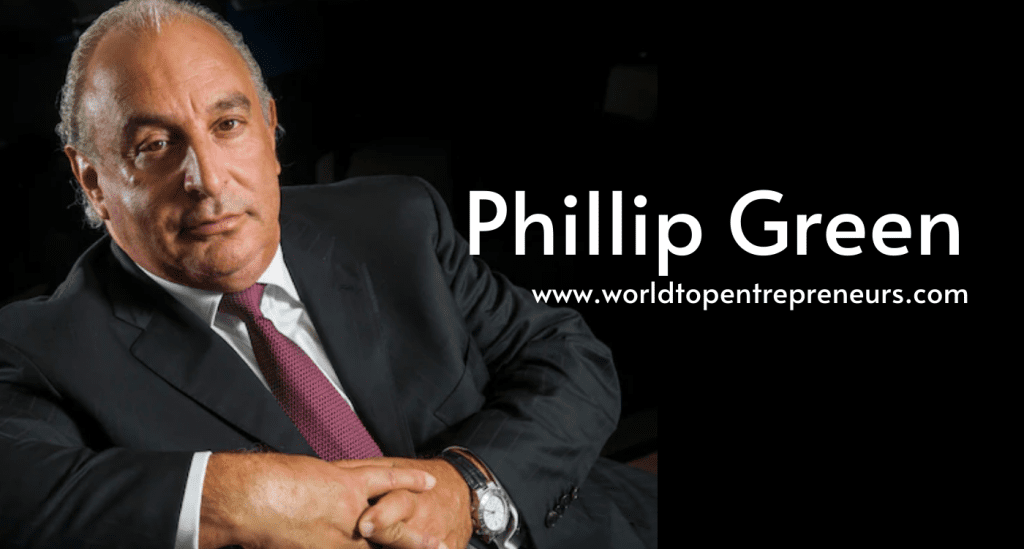
Sir Philip Green, a name synonymous with the British high street, helmed Arcadia Group during its peak as a retail empire. Known for his bold strategies and larger-than-life persona, Green played a crucial role in shaping the UK’s retail industry. However, his tenure was marked by controversies and challenges, culminating in the dramatic collapse of Arcadia in 2020.
Background: The Making of a Retail Tycoon
Born in London in 1952, Philip Green entered the world of business at a young age. His early ventures included importing jeans and selling discounted clothing, laying the groundwork for his retail empire.
Green’s big break came in 1988 when he acquired Jean Jeanie, a struggling retail chain, and successfully turned it around. Over the next decade, he built his reputation as a savvy dealmaker, known for acquiring undervalued businesses and reviving them.
The Arcadia Era: A Retail Revolution
Acquisition of Arcadia Group:
In 2002, Green acquired Arcadia Group for £850 million. The group owned some of the UK’s most iconic high-street brands, including Topshop, Topman, Miss Selfridge, Dorothy Perkins, Burton, Wallis, and Evans. The deal cemented Green’s position as a retail magnate and gave him control of a vast fashion empire.
Strategic Leadership
Green’s leadership style was bold and hands-on. He focused on aggressive cost-cutting measures, efficient supply chain management, and leveraging Arcadia’s real estate assets. Under his stewardship, Topshop became the jewel in Arcadia’s crown, appealing to younger, fashion-conscious consumers.
He also collaborated with celebrities and designers, such as Kate Moss, to enhance Topshop’s global appeal. The brand opened a flagship store in New York and expanded its online presence, marking Arcadia’s efforts to modernize.
Challenges and Controversies:
Lack of Digital Transformation
Despite early successes, Arcadia struggled to adapt to the digital era. Green’s reluctance to invest in e-commerce and technology left the group vulnerable to competition from online retailers like ASOS and Boohoo.
The BHS Scandal :
In 2000, Green acquired BHS (British Home Stores) for £200 million. However, after years of declining performance, he sold it in 2015 for just £1 to a little-known investor, Dominic Chappell. The deal attracted significant scrutiny, especially when BHS collapsed in 2016 with a £571 million pension deficit. Green faced criticism from MPs and the public, and he eventually contributed £363 million to the BHS pension fund after intense pressure.
Collapse of Arcadia Group:
By 2020, Arcadia was struggling with declining sales, mounting debts, and the impact of the COVID-19 pandemic. The group entered administration in November 2020, marking the end of an era for the high street giant. The collapse led to the loss of thousands of jobs and the closure of hundreds of stores.
Legacy and Impact:
Philip Green’s legacy is polarizing. On one hand, he was celebrated as a retail visionary who revolutionized the British high street and turned Topshop into a global phenomenon. On the other hand, his reluctance to adapt to digital trends and controversies like the BHS scandal overshadowed his achievements.
Arcadia’s downfall reflects the broader challenges faced by traditional retailers in the digital age. It also serves as a cautionary tale about the importance of responsible leadership and long-term planning in business.
Conclusion:
Philip Green’s story is one of dramatic highs and lows. From building a retail empire to overseeing its collapse, his tenure at Arcadia Group encapsulates the shifting dynamics of the retail industry. While his contributions to British fashion and retail are undeniable, the controversies and missteps that marked his career offer valuable lessons for the future of leadership and innovation in the sector.