Introduction:
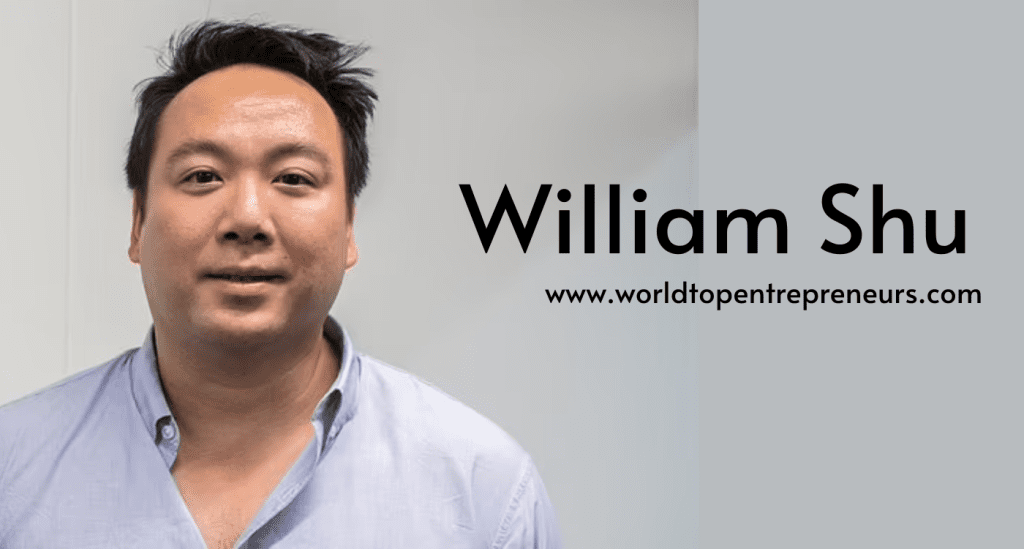
In the world of food delivery, few names stand out more than William Shu, the founder and CEO of Deliveroo, the global food delivery service that has transformed how people get their favorite meals from local restaurants. What began as a simple idea to address the personal inconvenience of picking up takeout has turned into one of the most successful tech-driven food delivery companies in the world. Since its launch in 2013, Deliveroo has grown exponentially, disrupting the food delivery market with its innovative approach and commitment to improving customer and restaurant experiences.
This blog delves into the journey of William Shu, his role in the creation of Deliveroo, and how his entrepreneurial vision has shaped one of the most influential companies in the food delivery industry today.
The Early Life of William Shu:
Born in 1980 in London, William Shu grew up with a strong interest in business and technology. Shu’s journey to becoming a successful entrepreneur began with his education. He graduated with a degree in Computer Science from the University of Oxford, where he honed his analytical and problem-solving skills. However, despite his technical background, Shu initially pursued a career in investment banking before transitioning into the world of entrepreneurship.
After spending several years working at Morgan Stanley, Shu recognized that his true passion lay in creating and running his own business. In 2013, he had an epiphany after facing the challenge of ordering food during his busy work life. At the time, he would often order takeout, but the experience was inconvenient and frustrating due to the long delivery times and limited options. He realized that there was a significant gap in the market for a more efficient, reliable, and customer-focused food delivery service.
The Birth of Deliveroo:
The idea for Deliveroo was born out of a personal inconvenience. William Shu decided to solve the problem for himself—and, in turn, for millions of others. He envisioned a service that would bring high-quality food from restaurants directly to customers’ doors, quickly and efficiently. Unlike traditional takeout services, which were limited to specific restaurants or delivery windows, Deliveroo would focus on offering a wider variety of food choices and ensure faster, more reliable delivery.
In 2013, Shu teamed up with Greg Orlowski, a former colleague, to launch Deliveroo. They started by delivering food on bicycles around their home base of London, using a simple model that relied on restaurants partnering with the service to have their food delivered to a wider customer base.
The initial days were challenging as the duo had to manage every aspect of the operation themselves, from handling deliveries to working on the tech platform. Shu, who had a background in technology, worked on building the app that would later become the backbone of Deliveroo’s operation. The app would allow customers to browse restaurant menus, place orders, track deliveries, and even pay—all from the convenience of their smartphones.
Shaping the Future of Deliveroo:
Under William Shu’s leadership, Deliveroo expanded rapidly beyond the initial launch in London. The company’s strategy centered around three key principles: technology-driven operations, a focus on quality, and strong relationships with local restaurants.
- Technology-Driven Operations
Shu understood the importance of using technology to streamline operations and improve the customer experience. Deliveroo built an advanced algorithm that could match restaurants with nearby riders, ensuring that deliveries were as fast as possible. The technology was designed to minimize delivery time while maximizing efficiency for both riders and restaurants. This technology also allowed Deliveroo to offer an extensive variety of restaurants, something that other competitors could not replicate at the time.
- A Focus on Quality
From the very beginning, Shu made it clear that Deliveroo would not compromise on quality. The company’s partnerships were based on bringing high-end restaurants to customers in the comfort of their homes. This focus on quality set Deliveroo apart from other food delivery platforms that were focused primarily on convenience and fast food. By partnering with well-established and high-end restaurants, Deliveroo was able to create a unique niche in the market that appealed to more discerning customers.
- Building Strong Relationships with Restaurants
Shu understood that the success of his business was intertwined with the success of the restaurants he partnered with. Deliveroo didn’t just rely on existing delivery models; instead, it provided restaurants with a new way to reach customers. By offering businesses access to a broader customer base and simplifying the logistics of delivery, Deliveroo helped increase restaurants’ revenue without requiring them to invest heavily in their own delivery infrastructure.
Scaling Deliveroo:
After the initial success in London, Deliveroo quickly expanded to other major cities in the UK and internationally. By 2015, the company was already operating in several European countries, including France and Germany. By 2016, Deliveroo expanded its reach to Australia and Singapore, and today, it operates in more than 200 cities across the globe.
The company’s rapid growth can be attributed to several key factors:
– Investor Support:
Deliveroo attracted significant venture capital funding, which allowed it to expand rapidly and scale its operations. Investors such as Index Ventures, Bridgepoint, and Accenture saw the potential in Deliveroo’s business model and provided the necessary resources to fuel its growth.
– Innovative Business Model:
In 2016, Deliveroo introduced its “Editions” model, a network of delivery-only kitchens. These kitchens are located in urban areas and allow restaurants to expand their reach without needing to open a physical store. This model has helped Deliveroo meet increasing demand while managing overhead costs.
– The Rider Community:
Another essential aspect of Deliveroo’s success has been its large and dedicated network of riders. The company’s gig-economy model allows riders to work flexible hours, which has attracted a wide pool of talent to join the platform. This flexibility has been vital in meeting the growing demand for food delivery services.
Challenges and Achievements:
Despite its growth, Deliveroo has faced its share of challenges. In 2018, the company’s attempt to go public with an IPO was met with mixed results, raising questions about its profitability. However, William Shu’s ability to pivot and adapt to new circumstances ensured that the company continued to thrive. Deliveroo made significant investments in its logistics, technology, and customer experience to ensure long-term success.
Shu’s leadership has been widely praised for his innovative thinking and relentless drive. Under his guidance, Deliveroo has not only become a leading force in food delivery but has also expanded into new sectors, such as grocery delivery, and introduced new features like “Plus” (a subscription service) to strengthen customer loyalty.
Conclusion:
William Shu’s journey from a frustrated takeout customer to the CEO of one of the largest and most influential food delivery services in the world is a testament to his entrepreneurial spirit and innovative mindset. Through Deliveroo, Shu has changed the way people think about food delivery, emphasizing quality, speed, and technology. Despite the challenges faced by the company, Shu’s vision and leadership have propelled Deliveroo to new heights, creating a global business that continues to shape the future of food delivery.
As Deliveroo expands its services and adapts to changing market conditions, William Shu’s role as a visionary leader will continue to be integral to the company’s ongoing success. The future of Deliveroo, and the food delivery industry as a whole, looks incredibly promising under his direction.