Introduction:
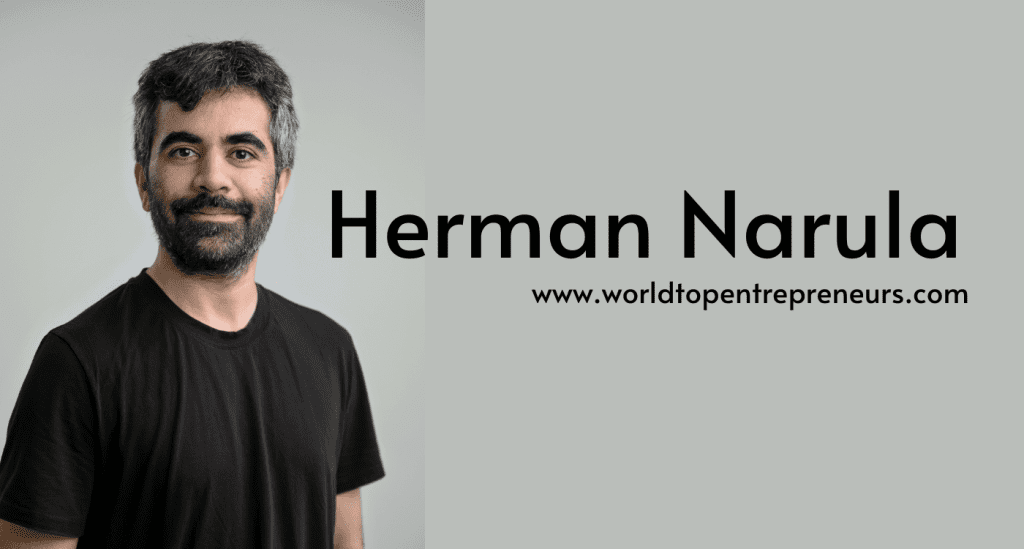
Herman Narula, co-founder and CEO of Improbable, has redefined the boundaries of virtual reality and online experiences. His vision for creating expansive, interactive virtual worlds has revolutionized industries ranging from gaming to defense. In this blog, we delve into Narula’s early life, the founding of Improbable, and his role in shaping its trajectory as a leader in the metaverse and simulation technologies.
Early Life and Education
Herman Narula was born into an entrepreneurial family in India. His father, Harpinder Singh Narula, built a thriving construction business, which instilled in Herman a strong business acumen. However, his passion lay in technology and gaming. As a child, he was fascinated by the potential of virtual worlds to create immersive experiences.
Narula pursued computer science at the University of Cambridge, where he honed his technical skills and deepened his understanding of computational challenges. It was at Cambridge that he met his future co-founder, Rob Whitehead. The duo shared a vision of building a platform that could create vast and complex virtual worlds.
The Founding of Improbable:
In 2012, Herman Narula and Rob Whitehead co-founded Improbable with Peter Lipka, aiming to revolutionize the creation of virtual environments. Their goal was to overcome the limitations of traditional game engines and simulation technologies, enabling developers to build expansive, highly interactive virtual worlds that could host thousands of players or entities simultaneously.
Key Challenges and Solutions;
- Scalability of Virtual Worlds
Narula and his team identified that existing infrastructure could not support the scale and complexity they envisioned. To address this, they developed SpatialOS, a cloud-based platform that allows developers to create vast, persistent worlds by distributing computations across multiple servers.
- Cross-Industry Applications
While gaming was the initial focus, Narula foresaw the potential of virtual worlds in sectors like defense, healthcare, and urban planning. Improbable’s technology enabled large-scale simulations for training, strategy, and decision-making, broadening the company’s reach.
Role in Improbable’s Growth
As CEO, Herman Narula has been the driving force behind Improbable’s evolution from a startup to a global leader in simulation technology.
- Visionary Leadership
Narula’s vision for Improbable transcends gaming. He often speaks about creating the “metaverse”—a network of interconnected virtual worlds that can transform how people interact, work, and play. His ability to articulate this vision has attracted top talent and strategic partners.
- Securing Strategic Investments
In 2017, Improbable made headlines by securing a $502 million funding round led by SoftBank. This investment was one of the largest for a European tech company at the time and solidified Improbable’s position as a key player in emerging technologies.
- Expanding Use Cases
Under Narula’s leadership, Improbable diversified its applications. Its technology is now used by governments for defense simulations, by urban planners for city modeling, and even in entertainment for creating large-scale virtual events.
Challenges and Innovations:
Improbable faced challenges in monetizing its technology, especially in gaming, where adoption of SpatialOS was slower than anticipated. However, Narula pivoted effectively, focusing on defense and enterprise applications where demand for large-scale simulations grew significantly.
In recent years, the company has also emphasized its role in building the metaverse, aligning with global trends toward interconnected digital experiences.
Legacy and Vision:
Herman Narula’s work at Improbable has positioned the company as a trailblazer in simulation and metaverse technologies. His commitment to innovation and his ability to envision the future of interconnected virtual worlds continue to inspire developers and industry leaders alike.
Beyond business, Narula is an advocate for ethical technology development, emphasizing the need for virtual worlds to enhance human connection and creativity rather than isolate or exploit.
Conclusion:
Herman Narula’s journey from a passionate gamer to the CEO of Improbable is a testament to the power of vision and perseverance. By addressing the limitations of traditional virtual environments and pushing the boundaries of simulation technology, he has opened up new possibilities for industries worldwide. As Improbable continues to innovate, Narula’s legacy as a pioneer in the metaverse and virtual worlds will undoubtedly shape the digital future.