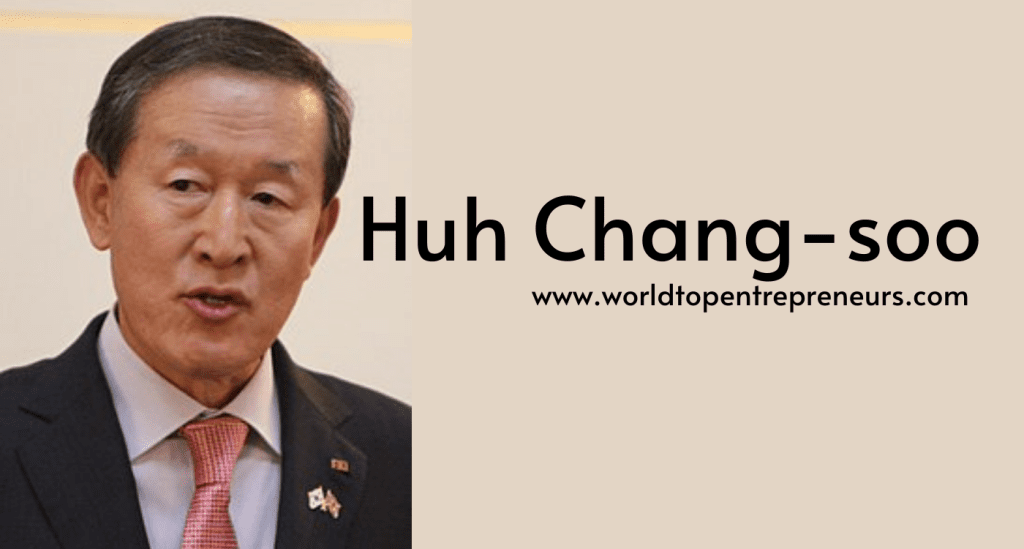
Huh Chang-Soo is a prominent South Korean businessman and the driving force behind GS Group, one of the largest and most diversified conglomerates in South Korea. As the chairman and CEO of the group, Huh has played a critical role in shaping GS Group’s trajectory, expanding its footprint across various sectors including energy, retail, and construction. His leadership has been marked by strategic diversification, innovative approaches, and a strong commitment to sustainable growth.
This blog delves into the life of Huh Chang-Soo, his rise in the business world, and his transformative impact on GS Group.
Early Life and Background
Huh Chang-Soo was born in 1946 in South Korea. He is the son of Huh Joon, the founder of GS Group, which was originally a part of the LG Group before it became a separate entity in the late 1990s. Growing up in a business-oriented family, Huh was exposed to the intricacies of corporate life at a young age.
Huh studied at Yonsei University in Seoul, where he earned a degree in Business Administration. He later pursued higher studies in the United States, attending Stanford University for his graduate degree, which helped hone his strategic thinking and broaden his perspective on global business practices.
Upon returning to South Korea, Huh joined LG Group and later transitioned to GS Group after the conglomerate was spun off in 2005. His early education and exposure to international business significantly contributed to his leadership style, characterized by a blend of traditional South Korean values and modern global business strategies.
The Formation of GS Group
GS Group was originally part of LG Group, one of South Korea’s largest conglomerates, and it operated under the name LG Energy. In 2005, LG Group underwent a major restructuring, which led to the formation of GS Group as a standalone entity. This move was a significant turning point, both for the group and for Huh Chang-Soo’s career.
Huh, who had been a key figure in LG Energy’s leadership, assumed a central role in the newly established GS Group. His first task was to ensure that the transition from LG’s umbrella to an independent entity was smooth and seamless. Under his guidance, GS Group began to grow rapidly, diversifying its operations into several key sectors, including energy, retail, construction, and telecommunications.
Huh Chang-Soo’s Role in Expanding GS Group
Diversification into Key Sectors
One of Huh Chang-Soo’s most significant contributions to GS Group has been its successful diversification strategy. He strategically expanded the company’s portfolio beyond its origins in energy and petrochemicals to include retail, construction, and telecommunications. This diversification allowed GS Group to weather economic fluctuations and market disruptions while continuing to grow in new and emerging markets.
- Energy and Petrochemicals: GS Group’s core business remains its energy sector, where it holds a dominant position in South Korea’s oil and gas industries. Huh has strengthened this foundation through investments in refining and distribution, particularly through its subsidiary GS Caltex, one of South Korea’s largest refineries. Under his leadership, GS Caltex expanded its production capacity and entered global markets, solidifying its role as a leading player in the international energy sector.
- Retail and Services: Huh has also played an instrumental role in building GS Retail, one of South Korea’s largest retail chains. The group operates numerous convenience stores, supermarkets, and online shopping platforms, catering to a wide variety of consumer needs. GS Shop, the group’s home shopping division, has seen significant success in expanding both its television and online platforms. Through these ventures, Huh has enabled GS Group to capture a significant share of South Korea’s retail market.
- Construction and Infrastructure: Another area where Huh has guided GS Group to success is the construction and infrastructure sector. Under his leadership, GS Engineering & Construction, the group’s construction arm, has undertaken large-scale projects both domestically and internationally. From residential complexes to massive industrial projects, the company has grown into one of the top construction firms in South Korea.
- Telecommunications: In addition to its physical infrastructure, GS Group has made important inroads into the telecommunications industry. Through GS Networks, Huh has expanded the company’s presence in the growing telecom sector, providing a variety of services from mobile networks to data solutions.
Strategic Global Expansion
Huh Chang-Soo also emphasized the importance of international growth. Under his leadership, GS Group expanded its reach beyond South Korea, entering several international markets. The company’s energy business, in particular, saw significant expansion, with GS Caltex forming strategic partnerships and acquiring interests in refineries and distribution networks in countries around the world.
Huh’s efforts to expand GS Group’s international presence were not limited to the energy sector. The group’s retail and construction divisions have also sought to tap into global markets, with ventures in Southeast Asia, the Middle East, and the Americas. These international expansions have helped the group increase its revenue streams and diversify risk.
Commitment to Sustainability and Corporate Responsibility
Throughout his leadership, Huh Chang-Soo has consistently emphasized the importance of sustainability and corporate social responsibility (CSR). Understanding that businesses must align with the evolving demands of society and the environment, Huh has guided GS Group to adopt environmentally friendly practices and focus on reducing its carbon footprint.
- Environmental Initiatives: As the chairman of GS Group, Huh has overseen significant investments in green energy and clean technologies. GS Caltex, for instance, has focused on reducing emissions from its refineries and increasing the use of renewable energy sources. Additionally, the company has undertaken several projects aimed at energy efficiency, waste reduction, and sustainable development.
- Corporate Social Responsibility (CSR): Huh has also been a strong proponent of CSR initiatives, focusing on improving the quality of life in the communities where GS Group operates. The group has been involved in numerous philanthropic efforts, ranging from supporting education and healthcare to providing disaster relief in times of crisis.
Challenges and Resilience
Despite the significant success and growth of GS Group under Huh’s leadership, his journey has not been without challenges. Like many large conglomerates, GS Group faced pressures from economic cycles, competition, and global market fluctuations. However, Huh’s resilient leadership allowed the company to adapt and stay competitive.
The global economic downturns, particularly during the 2008 financial crisis, tested the strength of GS Group’s diversification strategy. However, Huh’s ability to manage risk, continue strategic investments, and maintain a long-term vision ensured that the group not only survived but thrived in challenging times.
Huh Chang-Soo’s Legacy
Huh Chang-Soo’s leadership of GS Group has left an indelible mark on both the group and South Korea’s corporate landscape. His strategic vision, commitment to diversification, focus on global expansion, and emphasis on sustainability have shaped the company into a formidable conglomerate with a diverse portfolio.
Under Huh’s stewardship, GS Group has become one of South Korea’s leading business groups, with its subsidiaries making significant contributions to the country’s economy. As Huh continues to guide GS Group, his legacy as a transformative leader will likely continue to inspire future generations of business leaders.
Conclusion
Huh Chang-Soo’s leadership of GS Group has been nothing short of transformative. From guiding the group through its formative years to strategically diversifying its business model, Huh has positioned GS Group as one of South Korea’s most influential conglomerates. His focus on innovation, global expansion, and sustainability has paved the way for the group’s continued success in the competitive global market. Huh’s vision, resilience, and commitment to ethical business practices have made him one of South Korea’s most respected business leaders.