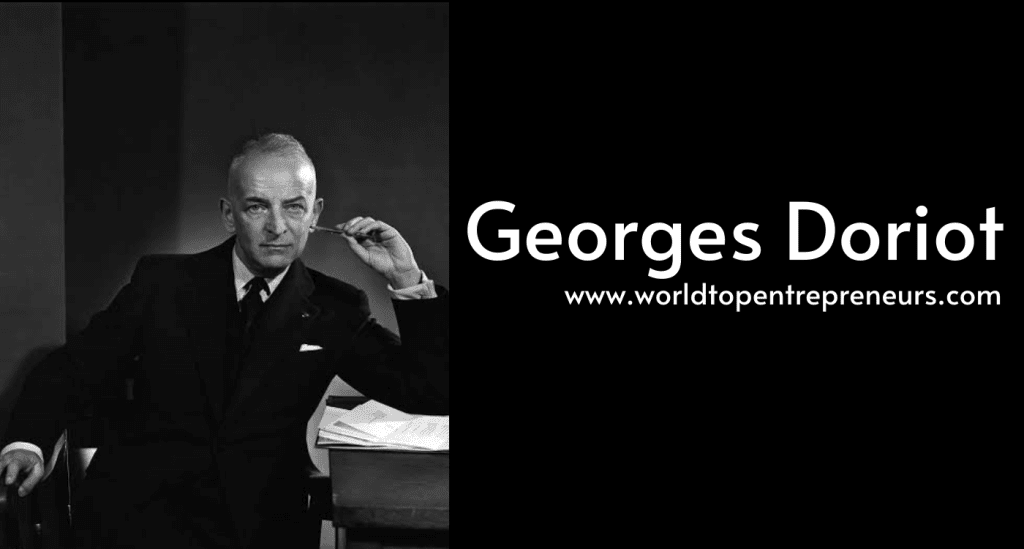
Introduction to Georges Doriot: The Visionary Behind Modern Venture Capital
Georges Doriot (1899–1987) is often referred to as the “father of venture capital.” His pioneering work in the development of venture capital as an investment model fundamentally transformed how entrepreneurs and startups were financed, setting the stage for Silicon Valley’s rise as the global hub for innovation. Doriot’s work didn’t just reshape the financial landscape; it also contributed to some of the most groundbreaking advancements in technology, from early investments in Digital Equipment Corporation (DEC) to the foundational steps that led to the emergence of companies like Intel.
In this blog, we’ll explore the life and achievements of Georges Doriot, his innovative approach to venture capital, and his lasting legacy in the world of entrepreneurship and technology.
Early Life and Education
Georges Doriot was born in Paris, France, on September 24, 1899, into an upper-class family with a strong academic background. His mother was a respected educator, and his father was a lawyer. Doriot’s intellectual curiosity was evident from an early age, and he eventually pursued an education in engineering at the prestigious École Polytechnique in Paris. However, Doriot’s future would take a different turn as he moved toward business and finance, fueled by his interest in technological innovation and entrepreneurship.
Doriot later moved to the United States to study at Harvard Business School. It was during his time at Harvard that he began to form the ideas that would later lay the groundwork for venture capital as a financial model. Upon graduating, Doriot spent some time in the military and then returned to academia, teaching at Harvard. It was during these years that he began thinking about how business could play a more significant role in developing new technologies and supporting entrepreneurs.
The Birth of Venture Capital: Creating the First Venture Capital Firm
Doriot’s big break came when he recognized the potential of investing in startups as a way to catalyze innovation. In 1946, Georges Doriot founded American Research and Development Corporation (ARDC) in Boston, which is widely considered to be the first venture capital firm in the United States.
At the time, the concept of venture capital didn’t exist. Entrepreneurs seeking capital for their innovations were largely dependent on banks or wealthy individuals, but the financial systems didn’t have a structured approach to funding high-risk, early-stage companies. Doriot sought to change that by creating a firm that would specialize in investing in startups and nurturing them through their early stages of development.
The key to Doriot’s vision was that he didn’t just offer financial support—he also provided hands-on guidance and expertise. He believed that the combination of money and mentorship was the critical ingredient for success in launching new businesses. Doriot brought a unique blend of engineering expertise, financial acumen, and management experience, which made ARDC a powerful force in the world of entrepreneurship.
Early Investments and Successes
Under Doriot’s leadership, ARDC quickly became known for its innovative approach to investing in technology startups. One of the most notable early investments made by ARDC was in Digital Equipment Corporation (DEC), a company founded by Ken Olsen in 1957. DEC became one of the leading manufacturers of computer systems and played a pivotal role in the development of the modern computing industry. The investment in DEC was a classic example of Doriot’s ability to identify groundbreaking technologies at their infancy.
Another of Doriot’s most successful investments was in Intel, the company that would eventually revolutionize the semiconductor industry. While the world of computers was still in its infancy, Doriot’s early backing of companies like DEC and Intel provided the essential seed capital needed to bring innovative technologies to market.
Doriot’s Approach to Venture Capital
What set Georges Doriot apart from other financiers of the time was his hands-on approach to venture capital. While many investors were content to provide funding and wait for the business to grow, Doriot believed in actively engaging with the companies he invested in. He wasn’t just interested in making money; he was deeply invested in helping entrepreneurs succeed.
Doriot saw himself not as a traditional banker but as a partner to the founders of the businesses he supported. He would work closely with them on everything from product development to strategy and management. This approach made him a trusted advisor to countless entrepreneurs and helped to establish his reputation as a mentor and leader in the venture capital field.
One of Doriot’s key principles was to invest in companies that were working on cutting-edge technology with the potential to change the world. He understood that the road to success would be uncertain, but he was willing to take calculated risks. Doriot’s willingness to invest in technologies that others deemed too risky or unproven laid the foundation for the venture capital industry’s reputation for backing bold, transformative ideas.
Doriot’s Influence on Silicon Valley
Georges Doriot’s impact on the development of Silicon Valley cannot be overstated. His pioneering work in venture capital served as a model for the burgeoning tech ecosystem in California. Many of the venture capital firms that emerged in the 1970s and 1980s, including Kleiner Perkins and Sequoia Capital, took inspiration from Doriot’s approach to investing and mentoring.
Additionally, Doriot’s emphasis on technological innovation and entrepreneurship provided the blueprint for the venture capital-driven growth of companies in industries such as software, hardware, biotechnology, and telecommunications. His philosophy that technology could serve as the catalyst for global economic growth and social change continues to be a guiding principle for the venture capital industry to this day.
Legacy and Recognition
Georges Doriot’s legacy is far-reaching. While he passed away in 1987, his influence continues to be felt in the world of venture capital. Many of the most successful venture capitalists, including those in Silicon Valley, credit Doriot with having laid the groundwork for their careers. His work at ARDC helped establish the venture capital model, which has since become an essential part of the startup ecosystem.
Doriot also had a lasting impact on Harvard Business School, where he mentored countless students who would go on to become leaders in the venture capital industry. His dedication to teaching and sharing his knowledge has shaped the careers of many individuals who followed in his footsteps.
Conclusion: Georges Doriot’s Lasting Impact on Venture Capital
Georges Doriot’s pioneering role in the development of venture capital transformed the world of finance and entrepreneurship. Through his visionary leadership of ARDC, Doriot not only helped build some of the most influential companies in technology but also changed the way the world thinks about investing in startups. His legacy as a mentor, investor, and innovator continues to influence the venture capital industry and will remain a cornerstone of startup financing for generations to come.
Doriot’s success as an investor wasn’t just measured by the financial returns of his investments, but also by the long-lasting impact he had on the companies he helped build and the entrepreneurs he supported. As the father of venture capital, Georges Doriot’s name remains synonymous with the spirit of innovation and risk-taking that drives the global startup ecosystem.