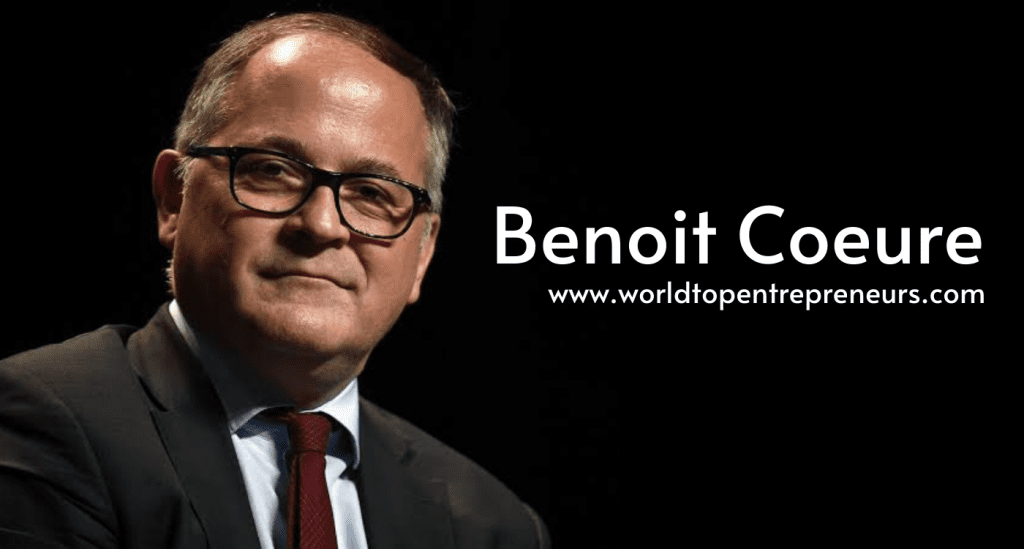
Benoît Cœuré, a French economist and policy strategist, has played a pivotal role in shaping the monetary policy landscape of the European Union. As a member of the Executive Board of the European Central Bank (ECB) from 2012 to 2019, Cœuré was instrumental in navigating the eurozone through critical economic challenges, including the aftermath of the global financial crisis and the European sovereign debt crisis.
This blog explores Benoît Cœuré’s contributions to the ECB, his leadership during turbulent times, and his lasting legacy in the realm of European monetary policy.
Introduction
The European Central Bank serves as the backbone of monetary stability for the eurozone, overseeing the monetary policy of 20 member states. In this highly complex and challenging environment, Benoît Cœuré emerged as a key figure who combined academic expertise with practical policymaking to address critical economic issues.
During his tenure, Cœuré championed innovative strategies, such as quantitative easing and the modernization of payment systems, while fostering transparency and communication with the public. This blog delves into his journey at the ECB and the profound impact he had on Europe’s economic landscape.
The Beginning: Benoît Cœuré’s Path to the ECB
1. Academic and Professional Foundation
Benoît Cœuré was born on March 17, 1969, in Grenoble, France. A graduate of the prestigious École Polytechnique and École Nationale de la Statistique et de l’Administration Économique (ENSAE), he built a strong foundation in economics and statistics.
Before joining the ECB, Cœuré held various influential positions in the French public sector, including:
- Deputy Director General of the French Treasury, where he worked on international financial issues and global economic governance.
- President of the Paris Club, a forum for restructuring sovereign debt.
These roles prepared Cœuré to tackle the complexities of European and global monetary systems.
2. Joining the ECB Executive Board
In 2012, Cœuré was appointed to the ECB Executive Board, a decision that came during a critical period for the eurozone. The region was grappling with the sovereign debt crisis, and trust in the single currency was under threat. Cœuré’s appointment brought expertise and stability to the ECB’s leadership.
Benoît Cœuré’s Role and Contributions at the ECB
1. Navigating the Eurozone Debt Crisis
Cœuré’s tenure began when the eurozone was facing its most severe economic crisis since its inception. As a key advocate of the ECB’s Outright Monetary Transactions (OMT) program, he supported Mario Draghi’s famous pledge to do “whatever it takes” to preserve the euro. This program reassured markets by providing a framework for purchasing sovereign bonds of struggling nations, stabilizing financial markets.
2. Quantitative Easing and Monetary Policy Innovation
Recognizing the need to combat deflationary pressures and stimulate economic growth, Cœuré played a critical role in implementing quantitative easing (QE) in the eurozone. Under this program, the ECB purchased government and corporate bonds to inject liquidity into the economy, encourage lending, and foster economic recovery.
Cœuré’s advocacy for non-conventional monetary policies demonstrated his willingness to adopt bold measures to stabilize the economy during extraordinary times.
3. Enhancing Payment Systems
Cœuré championed the modernization of the eurozone’s financial infrastructure, emphasizing the importance of efficient and secure payment systems. His leadership was instrumental in the development of the TARGET Instant Payment Settlement (TIPS) system, which allowed real-time payments across the eurozone.
This initiative reinforced the ECB’s role not only as a monetary policymaker but also as a facilitator of technological advancements in finance.
4. Commitment to Transparency
Cœuré was a strong advocate for transparency in central banking. He regularly engaged with the public and financial markets through speeches, interviews, and conferences. His efforts aimed to demystify monetary policy and foster trust in the ECB’s actions, especially during times of economic uncertainty.
5. Advancing European Integration
Cœuré viewed monetary stability as a cornerstone of European integration. He consistently advocated for closer fiscal coordination among eurozone member states, emphasizing the need for a strong institutional framework to complement the monetary union.
Impact: Shaping Europe’s Economic Future
1. Stabilizing the Eurozone
Cœuré’s contributions during the sovereign debt crisis were critical in restoring market confidence and stabilizing the eurozone. The OMT program, in particular, is widely regarded as a turning point in the crisis, preventing a potential breakup of the eurozone.
2. Driving Economic Recovery
Through quantitative easing and other unconventional measures, Cœuré played a key role in fostering economic recovery across the eurozone. His policies contributed to low borrowing costs for governments and businesses, which, in turn, stimulated investment and growth.
3. Leadership in Technological Innovation
Cœuré’s work on payment systems and his emphasis on financial technology laid the groundwork for the ECB’s engagement with emerging technologies like blockchain and digital currencies. His forward-looking approach ensured that the ECB remained relevant in a rapidly evolving financial landscape.
Legacy: Benoît Cœuré’s Enduring Contributions
Benoît Cœuré left the ECB in 2019, but his influence continues to shape European monetary policy and economic governance. After his tenure, he went on to lead the Bank for International Settlements (BIS) Innovation Hub, where he worked on global financial innovation, including central bank digital currencies (CBDCs).
Cœuré’s legacy at the ECB is marked by his pragmatism, innovation, and commitment to European unity. He not only helped the eurozone navigate some of its darkest hours but also positioned it to thrive in an increasingly interconnected and digital world.
Conclusion
Benoît Cœuré’s time at the ECB exemplifies the importance of bold leadership and innovative thinking in addressing complex economic challenges. His efforts to stabilize the eurozone, modernize financial systems, and promote transparency have left a lasting impact on Europe’s economic architecture.
As central banks around the world grapple with new challenges, Cœuré’s legacy serves as a reminder of the critical role that thoughtful and forward-looking policymakers play in ensuring economic stability and growth.