Introduction:
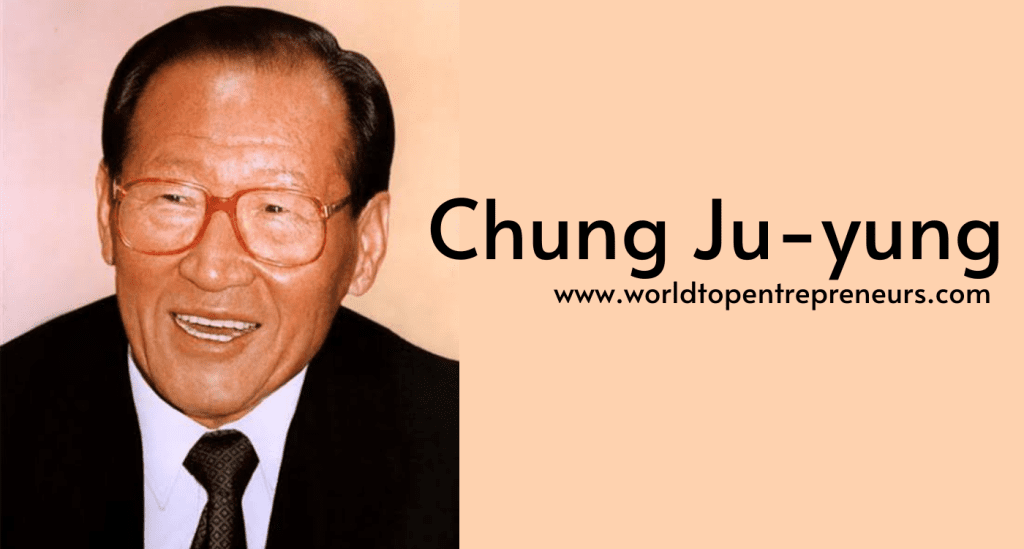
Chung Ju-Yung was a transformative figure in the history of South Korea’s economic development. As the founder of Hyundai Group, Chung’s vision and leadership helped shape Hyundai into one of the largest and most influential conglomerates in the world. His entrepreneurial journey, marked by innovation, risk-taking, and relentless ambition, made Hyundai a global leader in sectors like automotive manufacturing, shipbuilding, construction, and engineering.
In this blog, we will delve into Chung Ju-Yung’s life, the creation and growth of Hyundai Group, his key strategies for success, and the lasting impact of his leadership on South Korea’s economic transformation.
Early Life and Background:
Born in 1915 in the small farming village of Asan, South Korea, Chung Ju-Yung came from humble beginnings. He was the son of a poor farmer and grew up in a time of economic hardship in Korea. Despite the difficult circumstances, Chung was known for his ambition and determination from an early age.
Chung’s early life was marked by a desire to break free from his circumstances. After working in various small jobs and learning about carpentry and construction, he eventually moved to Seoul in the 1930s. His first major business venture was in the construction industry, where he began to establish himself as a skilled entrepreneur.
The Birth of Hyundai: A Vision for Progress
Chung Ju-Yung’s path to creating Hyundai Group began in the 1940s, when he founded a small construction company called Hyundai Engineering and Construction. The name “Hyundai,” meaning “modern” in Korean, reflected Chung’s aspirations to build something that would symbolize progress and modernization for South Korea.
In the early years, Hyundai’s focus was primarily on construction projects, including road building, infrastructure development, and civil engineering. However, Chung quickly recognized that to achieve his long-term goals, Hyundai needed to diversify into other sectors and grow into a multifaceted conglomerate.
The Entry into Automotive Manufacturing:
A pivotal moment in Hyundai’s history came in 1967, when Chung Ju-Yung decided to enter the automotive manufacturing industry. At the time, South Korea’s economy was largely agricultural, and the idea of producing cars in the country seemed ambitious, even audacious. However, Chung was determined to bring South Korea into the global industrial arena.
He established Hyundai Motor Company in 1967 and partnered with the Ford Motor Company to learn the basics of automotive manufacturing. Hyundai’s first vehicle, the Hyundai Cortina, was produced under a license agreement with Ford, but it was just the beginning of what would become a global automotive powerhouse.
Chung’s vision for Hyundai was not just to manufacture cars for the South Korean market but to create a brand that could compete internationally. This drive for global expansion would ultimately lead to the success of Hyundai Motor and the company’s significant presence in markets around the world.
Hyundai Group’s Expansion and Growth:
Chung Ju-Yung’s leadership of Hyundai Group was marked by a relentless push to diversify and expand into new industries. As Hyundai Motor flourished, Chung turned his attention to other sectors, each of which contributed to the growth and global success of Hyundai Group.
Shipbuilding and Heavy Industry:
In addition to automobiles, Chung recognized that shipbuilding and heavy industry were essential to South Korea’s economic development and Hyundai’s future success. In 1973, Hyundai entered the shipbuilding industry by founding Hyundai Heavy Industries in Ulsan, South Korea.
Under Chung’s leadership, Hyundai Heavy Industries became a global leader in shipbuilding, producing some of the largest and most advanced vessels in the world. The company also expanded into other sectors of heavy industry, including construction machinery, steel production, and petrochemicals. This move allowed Hyundai to leverage its strong engineering capabilities to dominate multiple high-demand industries.
Construction and Real Estate:
In addition to manufacturing, Chung continued to build Hyundai’s reputation in construction through Hyundai Engineering and Construction, which took on large-scale infrastructure projects both domestically and internationally. The company played a crucial role in South Korea’s rapid urbanization and infrastructure development during the 1960s and 1970s.
Hyundai’s construction division also became an important player in real estate development, helping to shape South Korea’s growing urban landscape. Hyundai’s involvement in building highways, bridges, buildings, and other essential infrastructure transformed South Korea’s infrastructure and contributed to its economic growth.
Key Strategies That Defined Hyundai’s Success:
Chung Ju-Yung’s success with Hyundai was driven by several key strategies that helped propel the company into global prominence. These strategies were rooted in his boldness, work ethic, and willingness to take risks.
Focus on Innovation and Quality:
One of Chung’s core beliefs was that innovation and quality were central to Hyundai’s success. From the automotive sector to shipbuilding, Chung emphasized that Hyundai should produce products that were not only competitively priced but also of the highest quality. Hyundai’s commitment to research and development (R&D) allowed it to continually improve and innovate, leading to the production of more reliable and sophisticated products.
Vertical Integration:
Another key strategy that Chung employed was vertical integration. Rather than relying on external suppliers, Hyundai sought to control every part of its supply chain. This approach allowed Hyundai to reduce costs, improve production efficiency, and maintain tighter control over the quality of its products. This strategy proved particularly effective in industries like automotive manufacturing and shipbuilding, where large-scale production and cost control were essential.
Global Expansion:
Chung’s global mindset was a defining characteristic of his leadership. Early on, he recognized the importance of international markets and took bold steps to expand Hyundai’s reach beyond South Korea. By the 1970s and 1980s, Hyundai was exporting its vehicles and products worldwide. Hyundai’s cars, particularly the Hyundai Pony, became popular in many countries, including the United States and Europe.
This global expansion allowed Hyundai Group to diversify its revenue streams and reduce reliance on the South Korean market. By the time of Chung Ju-Yung’s death, Hyundai had become a household name worldwide.
Legacy and Impact on South Korea’s Economic Development:
Chung Ju-Yung’s impact on South Korea’s economy is immeasurable. He was not only a successful entrepreneur but also a pioneer who helped transform South Korea from an underdeveloped nation into one of the world’s largest and most advanced economies. Hyundai Group’s rise mirrored the rapid economic growth of South Korea during the latter half of the 20th century, often referred to as the Miracle on the Han River.
Chung’s contributions went beyond business; he also played a key role in shaping South Korea’s national identity. His leadership helped foster a sense of national pride and ambition, as the Hyundai Group symbolized South Korea’s industrialization and global aspirations.
After Chung Ju-Yung’s death in 2001, Hyundai Group continued to grow and evolve, with Hyundai Motor and Hyundai Heavy Industries becoming leaders in their respective industries. The legacy of Chung Ju-Yung’s leadership lives on through the ongoing success of Hyundai Group, which remains a global leader in technology, manufacturing, and innovation.
Conclusion:
Chung Ju-Yung’s entrepreneurial journey is a testament to the power of vision, resilience, and determination. From humble beginnings, he built Hyundai Group into one of the world’s most influential conglomerates, transforming South Korea’s economy in the process. His leadership and innovative strategies in industries like automotive manufacturing, shipbuilding, and construction have left an indelible mark on the global business landscape.
Chung Ju-Yung’s story is one of bold ambition and unwavering commitment to creating a lasting legacy for his country and his company. As Hyundai continues to thrive today, his contributions to South Korea’s economic development and his global impact remain a shining example of what can be achieved with vision and determination.