Introduction:
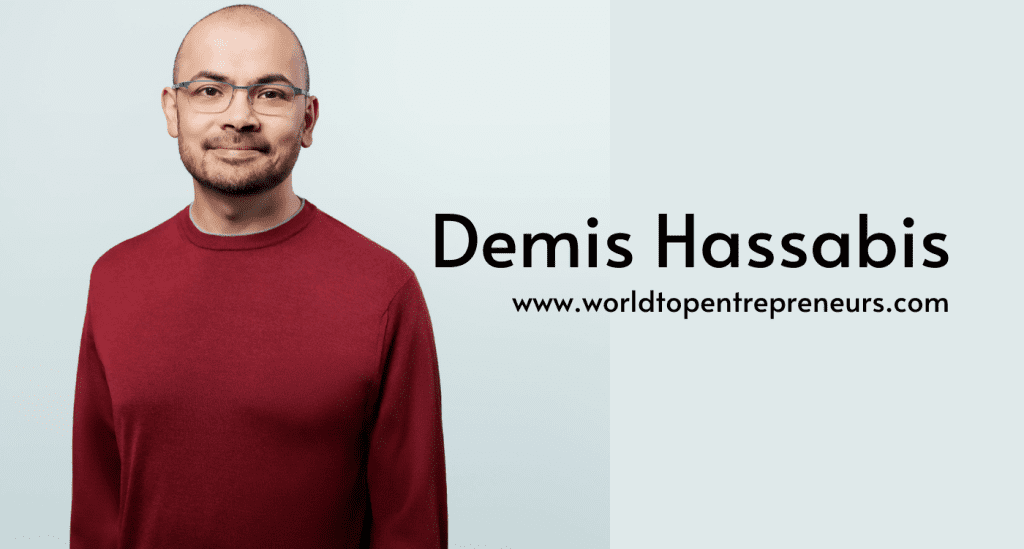
Demis Hassabis, a name synonymous with artificial intelligence, has made groundbreaking contributions to the field of AI through his co-founding and leadership of DeepMind Technologies. A polymath with achievements spanning neuroscience, computer science, and gaming, Hassabis has spearheaded initiatives that have redefined the boundaries of machine learning and its applications. DeepMind’s innovations have not only advanced AI research but also introduced transformative technologies to real-world challenges.
Early Life and Academic Foundations:
Born in London in 1976, Demis Hassabis exhibited an extraordinary intellect from a young age. A chess prodigy by the age of 13, he achieved the title of chess master. He pursued computer science at the University of Cambridge and later completed a Ph.D. in cognitive neuroscience at University College London. His interdisciplinary background, combining logic and understanding of the human brain, provided a unique foundation for his work in AI.
The Founding of DeepMind:
In 2010, Hassabis co-founded DeepMind with Shane Legg and Mustafa Suleyman. The company was established with a bold mission: “Solve intelligence to advance science and benefit humanity.” DeepMind focused on creating AI systems inspired by human cognition, a groundbreaking approach that distinguished the company in the crowded AI landscape.
Google acquired DeepMind in 2014 for $500 million, recognizing its potential to lead the AI revolution. This acquisition allowed DeepMind to access Google’s computational resources, accelerating its research endeavors.
Milestones in AI Innovation
- AlphaGo and the Game of Go
DeepMind gained global fame in 2016 when its AI system AlphaGo defeated world champion Lee Sedol in the ancient game of Go, a feat previously thought impossible due to the game’s complexity. AlphaGo’s triumph demonstrated the potential of reinforcement learning and neural networks to solve complex problems.
- AlphaFold and Protein Folding
In 2020, DeepMind achieved a scientific breakthrough with AlphaFold, an AI system capable of predicting protein structures with remarkable accuracy. This innovation addressed a 50-year-old grand challenge in biology, opening new frontiers in drug discovery and disease understanding.
- AI in Sustainability and Healthcare
Under Hassabis’s guidance, DeepMind has applied AI to tackle real-world issues like optimizing energy usage in data centers, reducing Google’s energy consumption by 40%. In healthcare, DeepMind’s AI has been instrumental in diagnosing eye diseases and predicting patient deterioration, showcasing its transformative potential in medical science.
Hassabis’s Vision for AI:
Hassabis envisions AI as a tool to advance scientific discovery and solve humanity’s greatest challenges. He advocates for a cautious yet ambitious approach, ensuring that AI developments align with ethical standards and global well-being. His belief in the synergy between AI and human creativity has positioned DeepMind as a pioneer in combining technology with societal benefits.
Challenges and Controversies:
While DeepMind has achieved unparalleled success, it has also faced scrutiny. Issues surrounding data privacy and ethical concerns in healthcare partnerships have sparked debates about the responsible use of AI. Hassabis has consistently emphasized the importance of transparency and collaboration with regulators to address these concerns.
Conclusion:
Demis Hassabis’s leadership at DeepMind has reshaped the AI landscape, blending scientific curiosity with practical applications. From mastering complex games to unlocking biological mysteries, DeepMind’s achievements reflect Hassabis’s visionary approach. As AI continues to evolve, Hassabis’s commitment to ethical innovation ensures that this technology will remain a force for good in tackling global challenges.