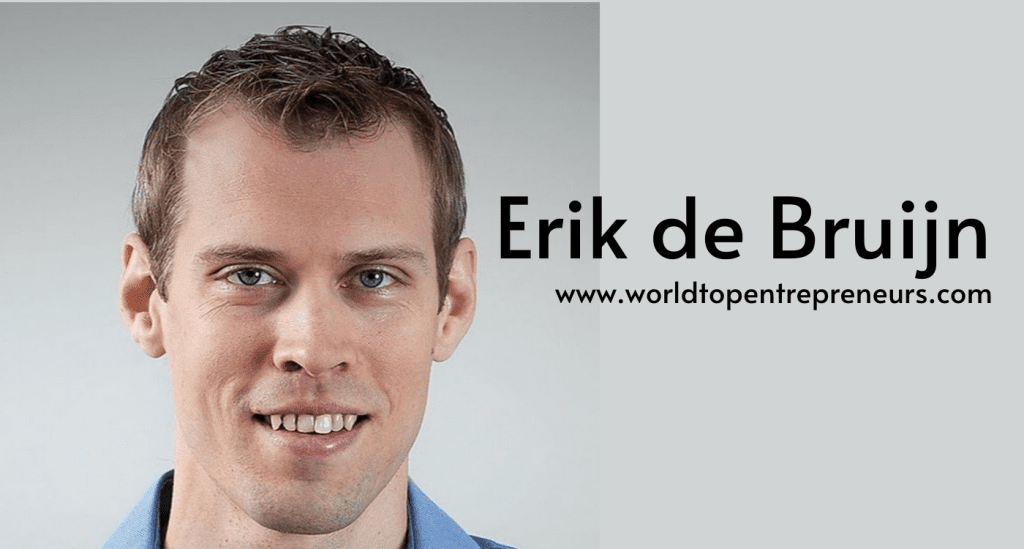
Erik de Bruijn and His Role in Ultimaker: Leading Innovation in 3D Printing
In the rapidly evolving world of 3D printing, few names have been as influential as Ultimaker. Known for revolutionizing the 3D printing industry by offering powerful, easy-to-use machines for professionals and enthusiasts alike, Ultimaker has become a global leader in the field. Behind much of the company’s success and innovation is Erik de Bruijn, a key figure in the company’s growth and technological advancements.
This blog explores Erik de Bruijn’s role in Ultimaker, his contributions to the company, and how his leadership and vision have shaped Ultimaker’s position as a leading innovator in the 3D printing industry.
Who is Erik de Bruijn?
Erik de Bruijn is an experienced entrepreneur and leader in the field of technology and manufacturing, particularly in the areas of 3D printing and additive manufacturing. With a background in both engineering and business, de Bruijn has a deep understanding of both the technical and commercial aspects of the 3D printing industry.
Before joining Ultimaker, de Bruijn worked in various technology-driven roles, where he gained valuable experience in product development and innovation. His skills in strategic thinking, technology integration, and team leadership eventually led him to Ultimaker, where he played a key role in transforming the company into a global leader in 3D printing solutions.
Ultimaker: A Game-Changer in 3D Printing
Founded in 2011 in the Netherlands, Ultimaker has become one of the most prominent names in 3D printing, providing a range of additive manufacturing solutions for professionals, educators, engineers, and designers. Ultimaker’s 3D printers are known for their precision, reliability, and ease of use, making them a favorite choice for a variety of industries.
Ultimaker’s products have been instrumental in enabling the widespread adoption of 3D printing, allowing businesses to create prototypes, produce parts, and test designs faster and more affordably than traditional manufacturing methods. By integrating their 3D printers with advanced software tools and an expansive materials ecosystem, Ultimaker has helped to democratize additive manufacturing, making it accessible to companies of all sizes, from startups to established enterprises.
As the company grew and evolved, Erik de Bruijn became an essential player in Ultimaker’s journey, particularly as the company focused on enhancing its product offerings, expanding its global presence, and fostering innovation in the 3D printing industry.
Erik de Bruijn’s Role at Ultimaker
Since joining Ultimaker, Erik de Bruijn has held several key positions within the company, each of which played a crucial role in shaping Ultimaker’s success. His leadership, combined with his technical expertise, has been instrumental in guiding Ultimaker through key stages of development and market expansion.
1. Strategic Leadership and Vision
One of de Bruijn’s key contributions to Ultimaker is his strategic leadership. He helped shape the company’s vision and long-term direction, ensuring that Ultimaker would continue to be an industry leader in the 3D printing space. His understanding of the market dynamics and the technological advancements in the field of additive manufacturing allowed him to steer the company in the right direction at crucial junctures.
De Bruijn’s role was not just about overseeing day-to-day operations; he was deeply involved in formulating the strategic goals that would help Ultimaker maintain its competitive edge. He recognized early on that the key to success in the 3D printing industry would be a combination of product innovation, user experience, and global market penetration.
2. Product Development and Innovation
As Chief Product Officer at Ultimaker, de Bruijn played a key role in product development. He worked closely with the engineering teams to ensure that Ultimaker’s 3D printers were not only cutting-edge in terms of technology but also user-friendly and accessible to businesses of all sizes. Under his leadership, Ultimaker focused on making its printers more versatile, precise, and compatible with a wide range of materials.
De Bruijn pushed for continuous improvements in Ultimaker’s software ecosystem, ensuring that users had access to the best tools to design, optimize, and produce their 3D-printed objects. The integration of Ultimaker Cura, the company’s powerful slicing software, into the broader Ultimaker product line was a key development under de Bruijn’s leadership, helping to simplify the printing process and expand the potential use cases for Ultimaker’s machines.
3. Expanding Ultimaker’s Ecosystem
One of de Bruijn’s most impactful achievements was his contribution to expanding Ultimaker’s ecosystem. While 3D printers are the core of Ultimaker’s business, de Bruijn recognized early on that creating a comprehensive ecosystem—comprising hardware, software, and materials—would be essential for the company’s long-term success.
Under his leadership, Ultimaker made significant strides in building out its ecosystem by adding new materials and working closely with a network of partners to expand the functionality of its 3D printers. This included making Ultimaker machines compatible with a wider range of third-party materials, ensuring that customers could use the printers for an even broader range of applications.
De Bruijn also spearheaded efforts to position Ultimaker as a platform for open-source innovation. Ultimaker embraced open-source principles, allowing developers, designers, and manufacturers to contribute to the ecosystem, further solidifying its position as a leader in additive manufacturing.
4. Global Expansion and Market Penetration
As Ultimaker grew, de Bruijn played an essential role in expanding the company’s global footprint. By focusing on building partnerships with distributors, resellers, and key players in the industry, he helped bring Ultimaker’s technology to new markets around the world.
De Bruijn was particularly focused on scaling the company in North America, Asia, and Europe, recognizing the potential for 3D printing to revolutionize manufacturing and prototyping across these regions. His efforts to establish a strong brand presence and create lasting relationships with businesses and organizations contributed significantly to Ultimaker’s position as a global leader in the industry.
The Impact of Erik de Bruijn at Ultimaker
Under Erik de Bruijn’s leadership, Ultimaker has seen tremendous growth, both in terms of its market presence and technological innovation. His ability to combine strategic thinking, product development expertise, and a deep understanding of customer needs has been a critical factor in the company’s success.
The Ultimaker 3D printers, with their reliability, precision, and ease of use, have become staples in industrial design, engineering, and manufacturing. Thanks to de Bruijn’s focus on creating a complete ecosystem of hardware, software, and materials, Ultimaker has built a loyal customer base of businesses and educational institutions around the world.
Beyond product development and market growth, de Bruijn’s leadership has had a profound impact on the culture of Ultimaker. By fostering a culture of innovation, open-source collaboration, and customer-centric thinking, de Bruijn has ensured that Ultimaker continues to lead the way in additive manufacturing.
Conclusion: Erik de Bruijn’s Legacy in 3D Printing Innovation
Erik de Bruijn’s role in Ultimaker has been instrumental in the company’s growth and success as a leader in the 3D printing industry. His vision for building a comprehensive ecosystem that integrates hardware, software, and materials, along with his strategic leadership, has ensured Ultimaker remains at the forefront of innovation in additive manufacturing.
As the 3D printing industry continues to grow and evolve, Erik de Bruijn’s contributions will leave a lasting impact on how businesses and individuals use 3D printing to enhance creativity, manufacturing processes, and prototyping capabilities. Through his leadership, Ultimaker has set the stage for even greater innovations in the world of additive manufacturing.