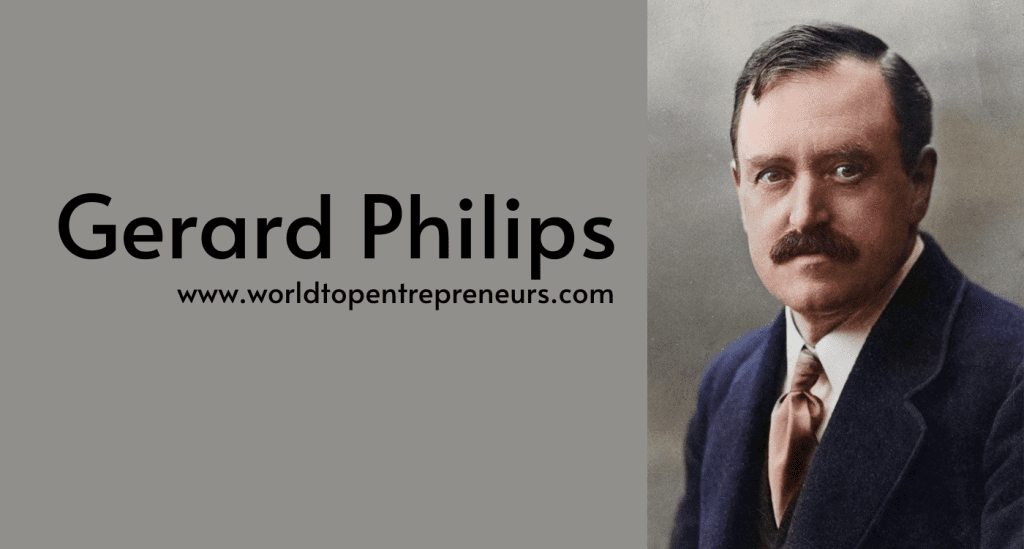
Philips, one of the most influential and globally recognized names in consumer electronics and healthcare technology, was founded by Gerard Philips in 1891. As a visionary entrepreneur, Gerard’s leadership and innovative spirit laid the foundation for what would become one of the world’s most successful technology companies. From humble beginnings in Eindhoven, Netherlands, to a multinational powerhouse, Gerard’s commitment to high-quality products, technological advancement, and a global business strategy helped Philips grow from a small factory into a leader in the electronics and healthcare industries.
This blog explores the life of Gerard Philips, his role in the founding and early growth of Philips, and the lasting impact he had on the company’s success. We will also examine his legacy in shaping the direction of Philips into a globally recognized brand and its enduring contributions to technology and innovation.
Introduction: The Visionary Founder Behind Philips
In the late 19th century, Gerard Philips and his brother Anton Philips took a bold step to revolutionize the lighting industry by founding Philips in Eindhoven, Netherlands. What started as a small light bulb manufacturing company would eventually evolve into a multinational conglomerate, producing everything from home appliances and healthcare technology to consumer electronics and lighting solutions.
Gerard Philips’ role in the company’s founding is critical not only because of his entrepreneurial vision but also for his ability to recognize the immense potential of the growing electrical industry at the time. His pioneering leadership set the stage for the company’s later success and global expansion.
The Beginning: Gerard Philips’ Early Life and the Foundation of Philips
1. Early Life and Education
Gerard Philips was born in 1858 in the Netherlands, in a family of entrepreneurs. His early education was focused on technical subjects, particularly in the areas of engineering and mechanical sciences. Gerard’s interest in electrical engineering grew over time, and he saw the potential to create new products in the emerging electrical field. Inspired by the booming technological advancements of the time, including the invention of the electric light bulb, Gerard pursued his passion for innovation and set out to make a significant impact.
2. Founding Philips
In 1891, Gerard Philips, along with his father, established Philips & Co. in Eindhoven. The company’s initial focus was on the production of carbon-filament light bulbs, which were in high demand as electric lighting gained popularity. The idea for the company was simple yet ambitious: to manufacture affordable, high-quality light bulbs that could be widely distributed.
At the time, there were only a few companies producing light bulbs, and the technology was still in its infancy. Gerard’s vision for Philips was to create a company that could not only produce reliable electrical products but also ensure that these products were accessible to a mass market.
Gerard Philips’ Role in Expanding the Company’s Product Portfolio
1. Shift to Industrial Manufacturing
Philips initially started by manufacturing light bulbs, but Gerard was quick to realize that in order for the company to grow and thrive, it needed to diversify its offerings. Under his leadership, Philips & Co. shifted focus from just being a light bulb manufacturer to becoming a broader electrical engineering company.
Philips expanded its manufacturing capabilities to include other electrical products such as radio receivers, television sets, and appliances. This diversification was essential in establishing Philips as a recognized brand in consumer electronics. Gerard’s decision to invest in a broader range of products would prove to be pivotal in the company’s future success, helping it grow from a small local operation into a significant player in the global market.
2. Emphasizing Research and Development (R&D)
One of Gerard’s most significant contributions was his focus on research and development (R&D). He understood the importance of technological innovation in securing the company’s future. Gerard ensured that Philips invested heavily in R&D, allowing the company to stay ahead of competitors and lead the way in technological advancements. This commitment to R&D helped Philips develop innovative products and technologies that would later set the company apart, including the X-ray tube, radio technology, and television equipment.
Global Expansion: Gerard Philips’ Vision for a Worldwide Company
1. Expanding Beyond the Netherlands
Under Gerard’s leadership, Philips grew rapidly within the Netherlands, but Gerard had larger ambitions. He believed that in order to establish Philips as a global brand, the company would need to expand internationally.
Philips started opening manufacturing facilities and sales offices in various countries, including Germany, the United States, and the United Kingdom. Gerard recognized early that success in Europe was not enough; Philips needed to tap into markets in the Americas and Asia to solidify its place as a global leader in the electronics industry.
2. Innovation for Global Markets
Gerard’s vision for Philips was not just to create innovative products but to design solutions that could be used by people around the world. His commitment to quality, accessibility, and affordability allowed Philips to create products that could reach global markets. For example, Philips’ radios and television sets were some of the first to be mass-produced, allowing the company to appeal to a wider audience across different regions.
Philips’ expansion into international markets marked the company’s transformation from a small Dutch manufacturer into a significant force in the global electronics sector. Gerard’s foresight and leadership helped Philips establish operations in key regions across the world, contributing to the company’s rise to prominence.
Impact and Legacy: The Enduring Influence of Gerard Philips
1. The Founding of a Legacy
Gerard Philips’ vision and leadership laid the groundwork for the success of Philips Electronics as we know it today. His strategic thinking in the early stages of the company’s development was instrumental in setting the tone for Philips’ long-term goals. He not only established a thriving business but also created a culture of innovation that would define the company for years to come.
His commitment to quality and reliability set Philips apart from competitors, making it one of the most trusted brands in consumer electronics. Through Gerard’s foresight, Philips became one of the first companies to break into the mass market with electrical products that were affordable and accessible, establishing the company’s reputation as a leader in technological innovation.
2. The Influence of Gerard’s Family
While Gerard Philips was the key figure behind the founding and growth of Philips, his family played a significant role in the company’s ongoing success. His son, Anton Philips, became instrumental in the company’s leadership and expansion, carrying on the vision that Gerard had set forth. The Philips family continued to play a significant role in the company’s operations for many years, ensuring the company remained true to its core values of innovation, quality, and global expansion.
Conclusion: Gerard Philips’ Foundational Role in the Success of Philips
Gerard Philips’ contributions to the company he founded go far beyond the initial creation of a light bulb manufacturing company. He set the foundation for Philips Electronics to become a leader in the global electronics and healthcare technology markets. His vision for a company committed to innovation, high-quality products, and global expansion shaped Philips into one of the world’s largest and most successful companies.
The principles Gerard set in motion—an unwavering focus on research and development, global market expansion, and diversification of product lines—remain central to Philips’ ongoing success. Gerard’s legacy is evident in every aspect of Philips’ modern-day operations, as the company continues to innovate and shape the future of industries ranging from healthcare technology to consumer electronics.