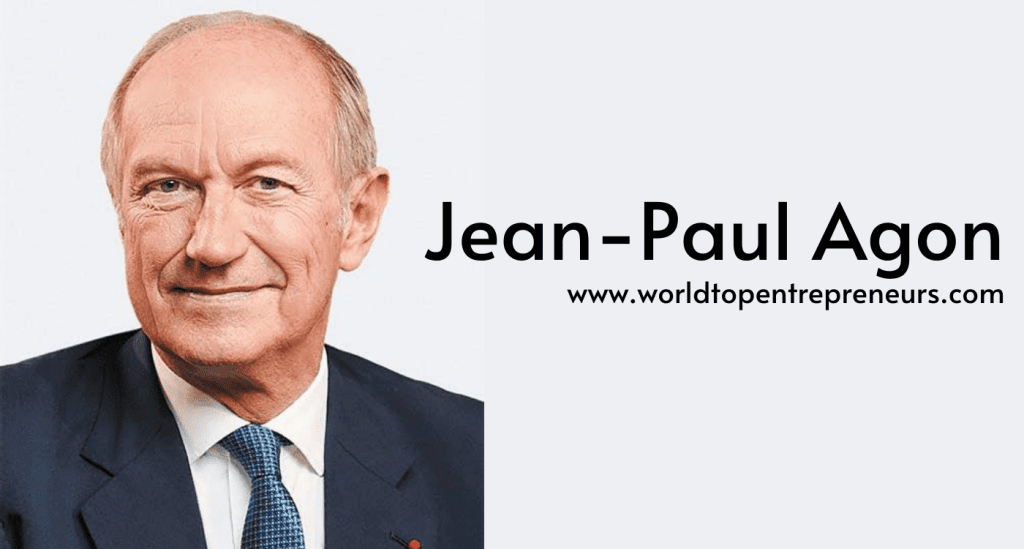
Introduction: Jean-Paul Agon and the Global Impact of L’Oréal
Jean-Paul Agon is one of the most influential figures in the beauty industry, best known for his remarkable leadership at L’Oréal, the world’s largest cosmetics and beauty company. Agon’s journey at L’Oréal began over three decades ago, and under his stewardship, the company expanded its global presence, embraced digital transformation, and solidified its position as an industry leader. His visionary approach to innovation, marketing, and sustainability helped steer L’Oréal through some of the most significant changes in the beauty market, setting new benchmarks for the industry.
This blog will explore Agon’s career, his transformative leadership style, and the strategic decisions that helped turn L’Oréal into a global powerhouse.
Early Life and Background: A Solid Foundation in Business
Jean-Paul Agon was born in 1958 in France. Growing up in a family with strong academic values, Agon pursued studies in the Sciences Po Paris (Institute of Political Studies) and later graduated from École des Hautes Études Commerciales (HEC Paris), one of France’s leading business schools. His education equipped him with a solid foundation in political science and business management, which would play a key role in his future success in the corporate world.
Agon began his career in the French Ministry of Finance, but he soon shifted his focus to the corporate world. In 1978, he joined L’Oréal as part of its marketing department. His early work in marketing and strategic planning allowed him to understand the inner workings of the beauty industry and position himself for future leadership within the company.
The Rise Through L’Oréal: Building a Legacy
Agon’s rise through the ranks at L’Oréal was marked by a combination of hard work, strategic vision, and an unwavering commitment to the company’s core values. Over the years, he held several key positions, including roles in marketing, management, and international business. His most significant early contribution came through his work in expanding L’Oréal’s presence in emerging markets.
As L’Oréal began to look beyond its traditional European and North American markets, Agon was instrumental in the company’s expansion into Asia, particularly China. In the early 2000s, as the Chinese market started to boom, Agon understood the potential for beauty products in this vast and diverse country. He spearheaded L’Oréal’s efforts to adapt products to local tastes and preferences, solidifying the company’s success in the region. Under his leadership, L’Oréal increased its market share in Asia-Pacific, one of the most important regions for beauty brands globally.
In 2006, Agon’s success was rewarded when he was named CEO of L’Oréal, succeeding Sir Lindsay Owen-Jones, who had led the company for nearly two decades.
Transforming L’Oréal: A New Era of Innovation and Growth
As CEO, Jean-Paul Agon oversaw a period of remarkable growth and transformation for L’Oréal. Under his leadership, the company adopted several strategies that reinforced its status as the beauty industry’s leader, ranging from innovative product development to a more inclusive, diverse approach to marketing.
1. Digital Transformation
One of Agon’s most significant contributions to L’Oréal was his forward-thinking approach to digital transformation. The beauty industry had been traditionally rooted in brick-and-mortar retail, but Agon recognized the growing importance of e-commerce and digital marketing. He led L’Oréal’s investment in digital platforms and online retail partnerships, particularly in Asia, where online shopping had become a dominant force.
Agon’s vision also included influencer marketing and social media strategies, which aligned L’Oréal’s brands with global digital trends. L’Oréal was one of the first beauty companies to fully embrace e-commerce, creating a seamless online experience that connected consumers directly with the brand.
2. Sustainability and Innovation in Beauty
Agon understood the importance of sustainability in the modern world, particularly in the beauty and cosmetics industry. Under his leadership, L’Oréal focused on more sustainable practices, from eco-friendly packaging to sourcing sustainable ingredients. L’Oréal launched various initiatives aimed at reducing its environmental footprint, such as a commitment to carbon-neutral production and improving water usage in manufacturing.
L’Oréal also continued its focus on research and development (R&D), leading to groundbreaking innovations in skincare, cosmetics, and hair care. The company invested heavily in cutting-edge technologies, including artificial intelligence (AI), augmented reality (AR), and personalized beauty products. The rise of beauty tech was an area where L’Oréal thrived, thanks to Agon’s commitment to pushing boundaries.
3. Expanding Brand Portfolio
Agon’s tenure saw the expansion of L’Oréal’s brand portfolio through both acquisitions and partnerships. L’Oréal acquired several prestigious brands, including the high-end skincare brand Kiehl’s, Urban Decay (a leading cosmetics brand), and the luxury skincare brand La Roche-Posay. These acquisitions allowed L’Oréal to diversify its offerings and strengthen its presence in various market segments, from luxury to mass-market beauty products.
Additionally, Agon led L’Oréal’s efforts to build an increasingly inclusive portfolio, which reflected a broad range of skin tones, cultures, and beauty standards. L’Oréal made substantial investments in diversity and inclusion in its marketing and product development, promoting beauty as something that could be universally celebrated.
4. Leadership and Corporate Culture
Agon’s leadership was characterized by his commitment to creating a dynamic corporate culture at L’Oréal. He was known for empowering his employees and fostering an environment of innovation and creativity. Under his leadership, L’Oréal was consistently ranked as one of the top employers in the beauty industry, attracting top talent in marketing, R&D, and product development.
Moreover, Agon emphasized the importance of ethics and social responsibility, making L’Oréal a company that not only focused on financial performance but also on contributing positively to society. L’Oréal’s “Sharing Beauty With All” sustainability program was one such initiative, which aimed to promote sustainable sourcing, reduce environmental impact, and empower individuals across the globe.
The Legacy of Jean-Paul Agon: A Lasting Influence on L’Oréal
Jean-Paul Agon’s leadership at L’Oréal has left an indelible mark on the company. His ability to innovate, adapt to changing market trends, and embrace digital technologies positioned L’Oréal as a beauty powerhouse in the 21st century. Under Agon’s leadership, the company not only expanded its market share but also redefined the beauty industry, making it more inclusive, sustainable, and tech-driven.
Agon retired as CEO in 2021, after more than 15 years at the helm. His legacy, however, continues to influence L’Oréal and the broader beauty industry. His emphasis on growth through innovation, diversity, and digital transformation remains the guiding principle for the company’s future. In addition, his personal commitment to corporate responsibility and sustainability has set a high bar for future leaders in the cosmetics and luxury goods sectors.
Conclusion: Jean-Paul Agon’s Vision for the Future of Beauty
Jean-Paul Agon’s tenure at L’Oréal has been a defining period for both the company and the beauty industry at large. Through his leadership, L’Oréal not only maintained its status as the world’s largest beauty company but also embraced new technologies, expanded into new markets, and prioritized sustainability and diversity. His legacy as a visionary in both business and social responsibility continues to shape L’Oréal’s strategies today.
Under Agon’s guidance, L’Oréal has become a company that is not only synonymous with luxury and beauty but also with progress and innovation in the beauty sector. His remarkable achievements will continue to influence the beauty industry for years to come.