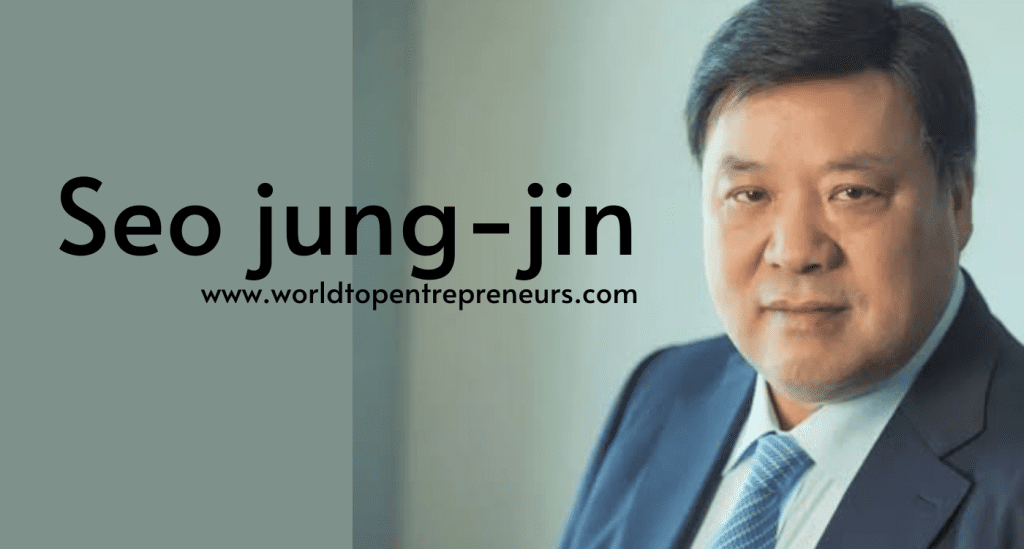
Seo Jung-Jin, the founder of Celltrion, is a prominent figure in South Korea’s rapidly growing biotechnology sector. His strategic foresight, innovative mindset, and leadership have made Celltrion one of the world’s most successful biopharmaceutical companies. Under his direction, Celltrion has not only become a leader in biosimilars but has also made a significant impact on global healthcare by providing affordable alternatives to expensive biologic drugs.
This blog delves into the life and career of Seo Jung-Jin, his role in founding and growing Celltrion, and how his vision has reshaped the global pharmaceutical industry.
Early Life and Background
Seo Jung-Jin was born in 1960 in South Korea. After completing his education in South Korea, Seo went on to study pharmaceutical sciences in the United States, a decision that would prove crucial in shaping his future career. During his time in the U.S., he gained exposure to the cutting-edge advancements in biotechnology and pharmaceutical sciences, which sparked his interest in the potential of biologics—medications made from living organisms that are used to treat a range of diseases, from cancers to autoimmune disorders.
Seo’s early professional career included working in the pharmaceutical industry, where he gained valuable experience in drug development, manufacturing, and business operations. However, he soon realized the immense opportunity that existed in the biosimilar market—a market that involved developing cheaper versions of biologic drugs, which were often prohibitively expensive for many patients.
Founding Celltrion: A Vision for Affordable Biologics
In 2002, Seo Jung-Jin founded Celltrion in Incheon, South Korea, with the goal of developing biosimilars—products that are highly similar to, but more affordable than, the original biologic drugs. At the time, the idea of biosimilars was still in its infancy, and there were few players in the market. However, Seo saw a tremendous opportunity to innovate and make life-saving biologic therapies more accessible to patients worldwide.
The Birth of Celltrion’s Biosimilars
Celltrion’s early efforts focused on creating biosimilars to some of the world’s most widely used biologic drugs, particularly in the fields of oncology and immunology. The company set its sights on creating high-quality, cost-effective alternatives to drugs like Remicade (for autoimmune diseases) and Herceptin (for breast cancer). Seo’s strategy was to utilize state-of-the-art biotechnological methods to replicate the complex molecules in these biologic drugs, ensuring that their efficacy and safety matched that of the original products.
Celltrion’s breakthrough came in 2006 when it successfully developed a biosimilar version of Remicade called Remsima. The launch of Remsima marked a turning point for the company, as it became one of the first biosimilars to be approved by European Medicines Agency (EMA) and the Korean Ministry of Food and Drug Safety. Remsima was seen as a major achievement, not only for Celltrion but for the entire biosimilars market.
Celltrion’s Global Expansion
Seo Jung-Jin’s vision for Celltrion was never limited to South Korea. From the very beginning, he sought to establish Celltrion as a global player in the biopharmaceutical industry. As the company grew, Seo expanded its reach to international markets, focusing on Europe, the U.S., and other key regions. His goal was clear: to provide affordable biologic treatments to as many patients as possible around the world, and in the process, make Celltrion a leading name in biosimilars.
In addition to Remsima, Celltrion also developed Truxima, a biosimilar to Roche’s Rituxan for treating cancers and autoimmune diseases. Truxima’s approval in both Europe and the U.S. helped cement Celltrion’s reputation as a global leader in biosimilars. The company continued to expand its portfolio of biosimilars, targeting high-demand biologic drugs in various therapeutic areas.
In order to compete in global markets, Seo led Celltrion in forming strategic partnerships with major pharmaceutical companies. The company collaborated with Teva Pharmaceuticals for marketing and distribution efforts in Europe and other regions. These partnerships played a critical role in expanding Celltrion’s global footprint.
Innovation and Investment in R&D
One of the hallmarks of Seo Jung-Jin’s leadership was his commitment to research and development (R&D). Under his leadership, Celltrion invested heavily in developing cutting-edge biosimilar technologies, ensuring that its products were not only cost-effective but also of the highest quality.
Seo also saw the importance of building state-of-the-art manufacturing facilities. In 2014, Celltrion completed its $1 billion manufacturing plant in Incheon, one of the largest and most advanced biologics production facilities in the world. This facility enabled the company to scale up its production capacity and meet the increasing demand for its biosimilar products globally.
In addition to biosimilars, Celltrion expanded its R&D efforts to include the development of new biologic drugs and biosimilar monoclonal antibodies. The company’s investment in R&D allowed it to diversify its product portfolio and reduce its dependence on just a few key drugs.
Seo’s forward-thinking approach to innovation also extended to digital transformation and the use of artificial intelligence (AI) and big data to improve the drug development process. By adopting these technologies, Celltrion aimed to streamline its R&D efforts, reduce costs, and bring new treatments to market more quickly.
Leadership in a Competitive Market
Seo Jung-Jin’s leadership extended beyond just business operations. He played a key role in shaping the biosimilars market and advocating for the adoption of biosimilars as viable alternatives to expensive biologics. His work in educating healthcare professionals, regulators, and patients about the benefits of biosimilars helped create a favorable environment for the growth of the biosimilars industry.
As the global demand for biologic drugs grew, Seo recognized the challenges of competing with established multinational pharmaceutical companies. To address these challenges, he focused on building Celltrion’s brand reputation as a trusted manufacturer of high-quality, cost-effective treatments. Seo’s emphasis on maintaining strict quality control standards and ensuring that Celltrion’s products met international regulatory standards was key to the company’s success.
Seo Jung-Jin’s Legacy
Seo Jung-Jin stepped down as the CEO of Celltrion in 2020, but his legacy continues to shape the company’s direction. His vision of making biologic treatments more affordable to a global audience remains central to Celltrion’s mission. Today, Celltrion is not only a leader in the biosimilar space but also a key player in the broader biopharmaceutical industry.
Under Seo’s leadership, Celltrion grew from a small startup to a multinational powerhouse, with a product portfolio that spans biosimilars, innovative biologics, and biomanufacturing solutions. His ability to foresee trends in the pharmaceutical industry and navigate the complexities of global markets has left an indelible mark on the biotechnology and healthcare sectors.
Seo Jung-Jin’s contributions to healthcare are still felt today. His focus on providing affordable healthcare options for patients, advancing medical science, and building global partnerships has transformed the biopharmaceutical landscape.
Conclusion
Seo Jung-Jin’s journey from a pharmaceutical student to the founder of one of the world’s leading biopharmaceutical companies is a testament to his vision, determination, and leadership. Through Celltrion, he not only built a global brand but also contributed to making life-saving biologic treatments accessible to millions of people around the world. His legacy will continue to inspire innovation and drive progress in the biotechnology and pharmaceutical industries for years to come.