Introduction: A Trailblazer in Abstract Expressionism
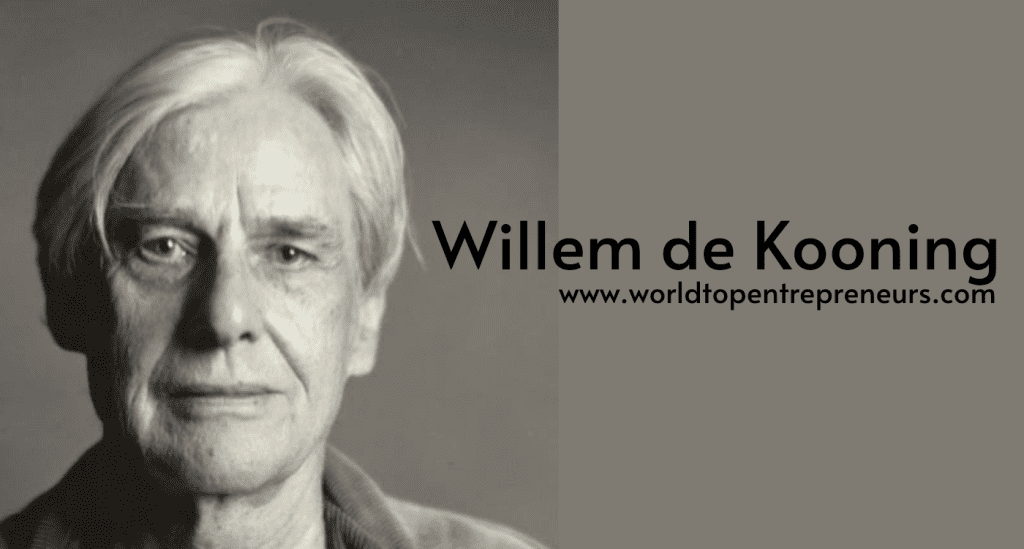
Willem de Kooning is considered one of the most influential and innovative artists of the 20th century. As a key figure in the Abstract Expressionist movement, de Kooning’s work transcended traditional boundaries of art, blending figuration with abstraction in ways that would define modern art for generations to come. His unique ability to combine raw emotion, dynamic composition, and inventive techniques placed him at the forefront of a movement that redefined artistic expression.
In this blog, we will explore the life, career, and artistic evolution of Willem de Kooning, examining his pivotal role in shaping the Abstract Expressionism movement and his enduring legacy in the world of contemporary art.
Early Life and Artistic Formation: Foundations of a Master
Willem de Kooning was born on April 24, 1904, in Rotterdam, Netherlands. Raised in a working-class family, he showed an early interest in drawing and visual arts. His artistic journey began when he enrolled in the Rotterdam Academy of Fine Arts at the age of 12. There, he honed his skills in traditional methods, focusing on still life and portraiture. However, his early exposure to modern art movements such as Cubism and Surrealism would soon influence his artistic trajectory.
In 1926, de Kooning moved to the United States, settling in New York City. His relocation marked the beginning of a new chapter in his life, as he became involved in the burgeoning avant-garde art scene. The city’s vibrant atmosphere and its dynamic art community played a critical role in shaping his artistic identity. It was in New York that he encountered artists like Jackson Pollock, Mark Rothko, and Franz Kline, all of whom would influence his work in significant ways.
The Evolution of De Kooning’s Artistic Style: From Realism to Abstraction
Willem de Kooning’s artistic style underwent significant transformation throughout his career. Initially, his works were grounded in figuration, but over time, he became known for his dynamic experimentation with abstraction. He was particularly noted for his ability to combine abstract and figurative elements within a single composition.
1. Early Works: The Influence of Realism
In the early years of his career in New York, de Kooning’s work leaned toward realism. His early paintings featured strong compositions, influenced by European modernist movements, and explored subjects like still lifes, figures, and portraits. However, de Kooning was always intrigued by the potential for abstraction, and this would eventually lead him to break away from traditional representational art.
2. The Rise of Abstract Expressionism
De Kooning became one of the central figures of the Abstract Expressionist movement, a group of artists who sought to express deep emotional and psychological experiences through abstraction. In the late 1940s and early 1950s, de Kooning began to push the boundaries of abstraction, moving away from the figurative elements of his earlier works and focusing more on energetic brushstrokes, bold colors, and spontaneous gestures.
His abstract works were characterized by dynamic compositions, large brushstrokes, and a sense of urgency and raw emotion. De Kooning embraced gestural abstraction, where the physical act of painting—often with quick, sweeping movements—was just as important as the finished work. This style was in stark contrast to the controlled, planned compositions of traditional art, reflecting the post-war anxiety and tumultuous times of the 1940s and 1950s.
3. The Woman Series: A Bold Intersection of Figuration and Abstraction
Perhaps de Kooning’s most iconic and controversial body of work is his “Women” series, created between the late 1940s and early 1950s. These paintings featured abstracted yet still recognizable female figures, often rendered in distorted, exaggerated forms. The “Woman” paintings blurred the lines between abstraction and figuration, as the figures were deconstructed into jagged, expressive shapes while still maintaining some semblance of recognizable human features.
The “Women” series is seen as both a critique and a celebration of female subjectivity. While some viewers criticized the works for their perceived aggression and distorted portrayals of women, others saw them as a powerful exploration of gender and identity. De Kooning’s use of broad, erratic brushstrokes and distorted shapes mirrored the internal chaos and emotional intensity of the time, capturing both the psychological and physical presence of women in an abstract, modern context.
Innovative Techniques and Impact on Modern Art
Willem de Kooning’s approach to painting was groundbreaking in many ways, and his innovative techniques played a critical role in shaping the direction of modern art.
1. The Fusion of Action and Composition
One of the most notable aspects of de Kooning’s work was his ability to combine action painting with a sense of composition. Whereas artists like Jackson Pollock were known for their focus on spontaneous, uncontrolled gestures (often referred to as “drip painting”), de Kooning’s works maintained an underlying sense of structure and form. His paintings were dynamic and full of movement, yet they also exhibited thoughtful attention to how colors, shapes, and lines interacted within the space of the canvas.
2. Brushwork and Color
De Kooning’s expressive brushwork was a key feature of his style. His thick, sweeping strokes of paint conveyed both energy and aggression, capturing the emotional intensity of the artist’s process. His use of bold, contrasting colors further emphasized the emotional content of his work. De Kooning was known for his mastery of color, employing both earthy tones and bright, contrasting hues to create visual tension and drama.
His ability to create texture and depth in his paintings, especially through layering and scraping, added another dimension to his work. He often used a technique known as “sgraffito,” where layers of paint were scraped away to reveal previous layers beneath, adding a sense of history and depth to each piece.
The Legacy of Willem de Kooning: A Master of Abstraction
Willem de Kooning’s contributions to the Abstract Expressionist movement, as well as modern art as a whole, cannot be overstated. His work marked a pivotal shift in the history of art, challenging established norms and pushing the boundaries of what painting could express.
1. A Pioneer of Abstract Expressionism
De Kooning’s involvement in the Abstract Expressionist movement positioned him as one of its leading figures. Alongside artists like Jackson Pollock, Mark Rothko, and Franz Kline, de Kooning helped define the New York School—a group of artists who were committed to emotional, gestural abstraction. His work was characterized by its dynamic energy, intense emotionality, and a sense of freedom, all of which became hallmarks of the movement.
2. Influence on Future Generations
De Kooning’s impact on the art world extends far beyond his own lifetime. His work has influenced countless artists who came after him, both within the realm of abstract expressionism and beyond. His blend of figuration and abstraction, his expressive use of brushwork, and his experimentation with color and composition have inspired generations of contemporary artists.
De Kooning’s approach to painting, with its sense of urgency and physicality, also had an impact on later movements, such as Post-Painterly Abstraction and Neo-Expressionism. His embrace of the spontaneous and the emotional paved the way for a more personal, intuitive approach to art that has resonated with artists working today.
Conclusion: The Everlasting Impact of Willem de Kooning
Willem de Kooning’s work represents a bold and enduring exploration of abstraction, emotion, and the human form. His role in the Abstract Expressionist movement was crucial in shaping the direction of modern art in the 20th century. Through his innovative techniques, dynamic compositions, and commitment to emotional depth, de Kooning created art that was not just visually compelling but deeply psychological and philosophical.
As one of the leading figures in the development of modern art, de Kooning’s legacy continues to influence contemporary artists around the world. His transformative contributions have made him a cornerstone of the artistic canon, and his work remains a powerful testament to the potential of painting to express the complexities of human experience.