Introduction:
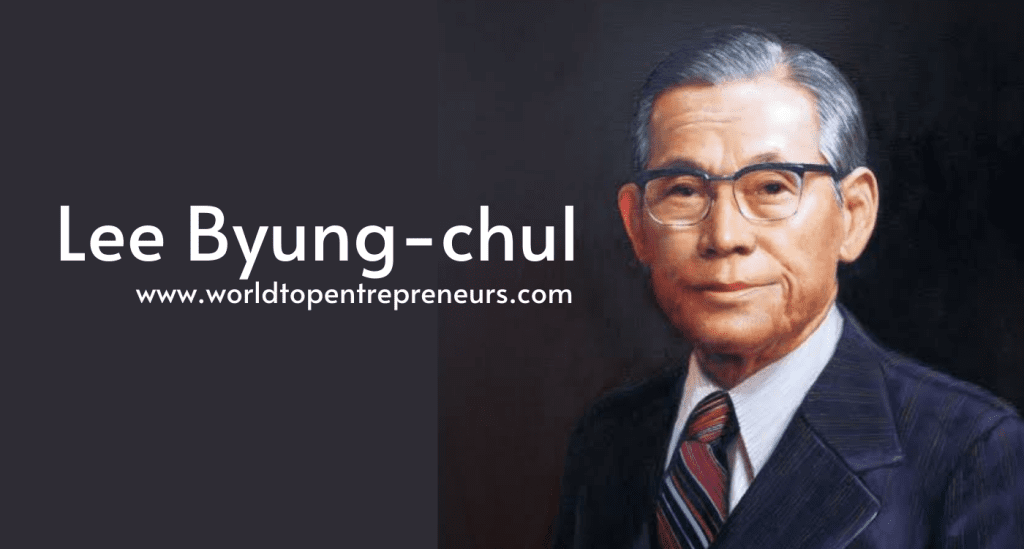
Lee Byung-chul is one of South Korea’s most influential entrepreneurs and the visionary founder of Samsung Group, a multinational conglomerate that has become synonymous with innovation and technology on a global scale. Born in 1910, Lee’s journey from a small trading company to the leader of a global tech empire is a remarkable story of perseverance, ambition, and transformative leadership.
This blog delves into Lee Byung-chul’s early life, his entrepreneurial journey, his pivotal role in establishing and growing Samsung, and his enduring legacy in the tech and business world.
Early Life and Education:
Lee Byung-chul was born in Uiryeong, South Korea, in 1910. Raised in a relatively affluent family, Lee was the son of a wealthy landowner, which gave him access to quality education. He attended Waseda University in Japan, where he studied economics, which laid the foundation for his future business ventures.
After his education, Lee returned to Korea, where he began working in various small businesses. His early exposure to trade and commerce would play a pivotal role in his later ventures. Although Lee was initially focused on trade and logistics, his vision would soon expand beyond these modest enterprises to a much broader and far-reaching business empire.
The Birth of Samsung: A Vision for the Future
In 1938, Lee Byung-chul founded Samsung in Daegu, South Korea. At its inception, Samsung was a small trading company involved in groceries, dried-fish, noodles, and other goods. Its name, Samsung, comes from the Korean words “Sam” (meaning three) and “Sung” (meaning stars), symbolizing greatness and eternity. Lee’s vision for Samsung was to create a company that would be powerful, influential, and long-lasting—and he certainly succeeded in that goal.
While Samsung started as a modest trading business, Lee Byung-chul had broader ambitions for the company. He wanted to diversify Samsung into multiple industries, focusing on manufacturing, technology, and electronics. This vision would eventually transform Samsung into one of the most successful conglomerates in the world.
The Transformation of Samsung: From Trading to Electronics:
Lee’s vision for Samsung was nothing short of groundbreaking, as he gradually shifted the company’s focus from trading to manufacturing and technology, a move that would lay the foundation for Samsung’s success in the modern world.
Expanding into Manufacturing:
In the early 1950s, Lee began to diversify Samsung’s operations by investing in manufacturing. Samsung’s first major venture outside of trade was Samsung Textiles, which allowed the company to enter the fabric and textile industry. With his focus on growth, Lee quickly recognized that for Samsung to succeed in the long term, it needed to expand into industries that had strong growth potential.
Entering the Electronics Industry:
The pivotal moment in Samsung’s history came in 1969 when Lee Byung-chul decided to venture into the electronics industry by establishing Samsung Electronics. This move marked the beginning of Samsung’s journey toward becoming one of the most powerful global tech companies.
At first, Samsung Electronics produced black-and-white televisions, which, though relatively modest, were the beginning of what would become a multi-billion-dollar business. Lee’s foresight was apparent as he continued to focus on growing Samsung’s technological capabilities and investing heavily in research and development (R&D). He established key manufacturing plants, developed new products, and invested in innovation, which positioned Samsung to become a global leader in consumer electronics.
Key Strategies for Success:
Lee Byung-chul was not only an entrepreneur but also a visionary whose leadership and strategic decisions drove Samsung Group’s success. His leadership style was aggressive yet focused, with a clear emphasis on quality, innovation, and long-term growth. Below are some of the key strategies that Lee implemented during his tenure:
Focus on Innovation:
Lee was ahead of his time when it came to innovation. He understood that for Samsung to compete with the global giants of the tech industry, it needed to constantly push boundaries. Samsung invested heavily in R&D, making it a central part of the company’s strategy. Lee also made significant investments in semiconductors, which would eventually become one of the company’s core areas of strength. His leadership helped Samsung gain a competitive edge in developing cutting-edge technologies, including the world’s first 64K DRAM chip in 1983, which helped the company solidify its position in the semiconductor market.
International Expansion:
Lee Byung-chul recognized the importance of going global to expand Samsung’s influence. By the 1970s and 1980s, Samsung had already started exporting its products to international markets, including the United States, Europe, and Middle Eastern regions. Samsung’s strategic international expansion helped the company become a globally recognized brand.
In addition to expanding its electronics business, Lee sought to diversify Samsung’s portfolio by acquiring interests in construction, insurance, and shipbuilding, creating a vast conglomerate that spanned various industries.
Building a Strong Corporate Culture:
Lee Byung-chul was a strong believer in corporate culture as a driver of business success. He fostered a culture of discipline, loyalty, and a strong work ethic within Samsung, ensuring that employees were committed to the company’s goals. Samsung’s emphasis on teamwork, innovation, and results became a cornerstone of its operations, helping it sustain its rapid growth.
The Legacy of Lee Byung-chul:
Lee Byung-chul passed away in 1987, but his legacy lives on through Samsung’s continued success. By the time of his death, Samsung had already established itself as a leader in the global electronics industry, but his vision for the company continued to guide its growth for years to come. Under the leadership of his son Lee Kun-hee, Samsung became a powerhouse in the global tech industry, introducing some of the world’s most iconic products, including smartphones, televisions, and semiconductors.
Today, Samsung is one of the world’s most valuable companies, known for its cutting-edge innovation in consumer electronics, semiconductors, and telecommunications. The company has not only achieved massive success but has also become a symbol of South Korea’s economic growth and development.
Conclusion:
Lee Byung-chul’s impact on the global business world, particularly in the technology sector, is immeasurable. Through his visionary leadership, Lee transformed Samsung Group** from a small trading company into a global tech powerhouse. His focus on innovation, international expansion, and corporate culture laid the foundation for Samsung’s success and helped it become one of the largest and most influential companies in the world.Lee’s legacy lives on in the modern Samsung empire, which continues to shape the technology landscape. As one of the pioneers of the global tech industry, Lee Byung-chul’s story remains an inspiring example of the power of entrepreneurship, vision, and persistence.