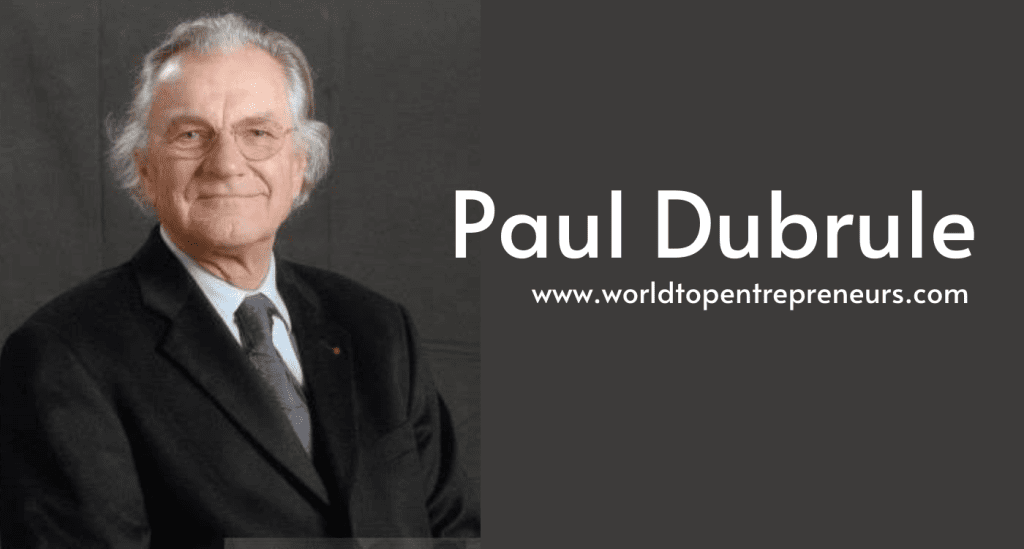
Introduction to Paul Dubrule
Paul Dubrule is a French entrepreneur and hotel industry pioneer, best known for co-founding Accor Hotels, one of the world’s largest and most successful hospitality groups. His contributions to the hospitality industry have been instrumental in shaping the modern hotel landscape, making Accor a household name with a global presence in over 100 countries. As a visionary leader, Dubrule’s innovative approach to hotel management, franchising, and customer service transformed the hospitality business, turning Accor into a multinational powerhouse.
In this blog, we’ll explore Paul Dubrule’s journey, his role in the creation and expansion of Accor, and the enduring legacy he left on the hospitality world.
Early Life and Background
Paul Dubrule was born in France in 1942. Before venturing into the hospitality industry, he gained a background in civil engineering and business management. His early career saw him work in various roles related to construction and development, skills that would later prove invaluable in the hotel industry.
In the 1960s, Dubrule’s interest in the hospitality sector was piqued, and he began to realize that there was an untapped potential in providing standardized and accessible hotel services for the growing middle class. At the time, the hotel industry was highly fragmented, with a mix of small, independent hotels that lacked consistency in service quality, pricing, and guest experience.
The Birth of Accor Hotels
The journey of Accor Hotels began in 1967 when Paul Dubrule, alongside his partner Gérard Pélisson, co-founded the company in France. Initially, the company was known as Société des Hôtels Accor and operated with a vision to revolutionize the hotel industry. The duo recognized an opportunity to create a standardized hotel chain that would cater to a growing segment of budget-conscious travelers, as well as business clients seeking affordable yet reliable accommodations.
The first major milestone for Accor came in 1967 with the launch of the Ibis hotel brand. Ibis was designed as an affordable, no-frills hotel that would offer consistent, high-quality services at an accessible price. The Ibis model was revolutionary at the time, as it offered quality, efficiency, and affordability—traits that had not been prioritized in the hotel industry previously.
Expansion and Growth of Accor
Under Paul Dubrule’s leadership, Accor quickly began to expand, both domestically and internationally. The company’s strategy focused on franchising, allowing it to scale quickly and efficiently. This model allowed independent hotel owners to operate under the Accor brand, benefiting from the company’s marketing, operational support, and global recognition.
Accor’s commitment to standardization and quality became its hallmark, and over the next few decades, the company rapidly expanded its portfolio. It not only launched additional hotel brands like Novotel, Mercure, and Sofitel but also began to diversify its offerings into new markets. By the 1980s, Accor was already making significant strides in the international market, with hotels across Europe, North America, and Asia.
One of Dubrule’s most notable achievements was his ability to adapt the company’s strategy to different markets. He emphasized a global vision while remaining sensitive to local cultures and needs, which allowed Accor to effectively penetrate diverse regions. For example, the company began focusing on business and luxury segments with the Sofitel brand, while simultaneously maintaining its leadership in the budget sector with Ibis and Novotel.
Key Innovations and Strategies
Paul Dubrule’s approach to innovation played a significant role in Accor’s success. Here are some key strategies and innovations under his leadership:
- Franchising Model: One of the core strategies that drove Accor’s growth was its franchise model. By allowing independent hotel owners to operate under Accor’s established brands, the company could expand rapidly without having to build and manage each hotel itself. This approach helped Accor quickly scale across the globe.
- Diverse Brand Portfolio: Accor’s wide-ranging portfolio of hotel brands catered to different market segments, from budget travelers to luxury guests. Brands like Ibis targeted the economy sector, Novotel focused on business travelers, while Sofitel represented the high-end market. This approach allowed Accor to reach a broader customer base and diversify its revenue streams.
- Customer-Centric Innovation: Dubrule emphasized the importance of customer experience in the hotel industry. Accor pioneered many innovations, including online reservation systems, loyalty programs, and consistent service standards across its brands, which enhanced customer satisfaction and brand loyalty.
- Global Expansion: Under Dubrule’s leadership, Accor’s expansion strategy was focused on entering new markets, particularly in Asia, the Middle East, and Latin America. The company invested heavily in international markets, opening hotels in major cities across the world and establishing Accor as a global hospitality leader.
- Strategic Acquisitions: Throughout his tenure, Dubrule was strategic in acquiring other hotel chains, which expanded Accor’s portfolio even further. Notably, the acquisition of Red Roof Inns in the 1990s allowed the company to make inroads into the U.S. market, while the acquisition of Fraser Suites and Fairmont Raffles bolstered its presence in the luxury and long-stay hotel segments.
Paul Dubrule’s Leadership and Legacy
Paul Dubrule’s leadership was instrumental in transforming Accor from a small regional hotel chain into a global hospitality powerhouse. His focus on innovation, quality service, and an expanding brand portfolio ensured the company’s position as a leader in the competitive hospitality industry. Beyond his business acumen, Dubrule’s emphasis on maintaining strong relationships with hotel owners, employees, and customers helped create a culture of loyalty and excellence within Accor.
After stepping down from his role as CEO in the early 2000s, Dubrule remained involved with Accor as a board member and continued to influence the company’s direction. His vision of creating a global network of hotels that offered a variety of experiences—while maintaining consistency and quality across brands—has left a lasting mark on the hospitality industry.
Even after his departure from the active leadership role, Accor continued to thrive and evolve. Under subsequent leaders, the company maintained the foundations laid by Dubrule, expanding further into new markets and developing new brands, including ibis Styles, Pullman, and Adagio.
Conclusion
Paul Dubrule’s role in the creation and expansion of Accor Hotels is a testament to his vision, leadership, and deep understanding of the hospitality industry. From the launch of the Ibis brand to the creation of a diverse and successful global portfolio, Dubrule’s influence on the company has shaped Accor into the multi-billion-dollar giant it is today. His innovative approaches to hotel franchising, customer service, and global expansion revolutionized the hotel industry, setting a standard for consistency, quality, and innovation.
Paul Dubrule’s legacy lives on in the Accor Group—a leader in hospitality that continues to grow and adapt to the changing needs of travelers worldwide. His contributions to the industry have not only made a significant mark on the global hospitality landscape but have also set the stage for future advancements in hotel management and customer service.